The Legacy Land Play: 1031 Exchange Alternatives for Family Tracts
![[HERO] The Legacy Land Play: 1031 Exchange Alternatives for Family Tracts](https://cdn.marblism.com/1YGcvntdu44.webp)
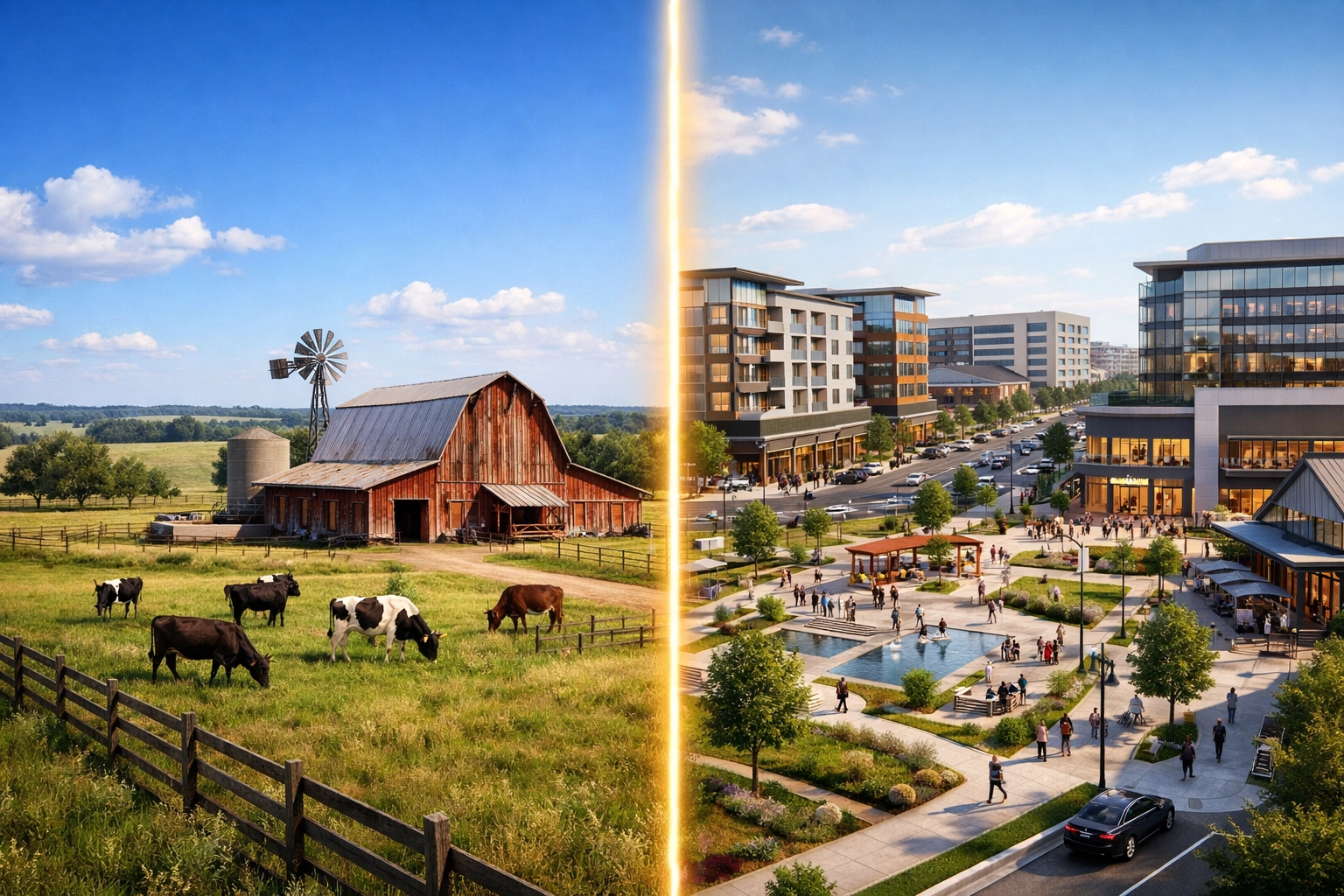
Your family's held that 150-acre tract in Denton County since 1978. Grandpa paid $800 an acre. Today? You're looking at offers north of $40,000 per acre from developers who want to carve it into executive home sites or multifamily pods.
The math is incredible: until your CPA runs the capital gains calculation.
That's when most families hit the wall. A standard 1031 exchange sounds great in theory, but finding replacement property that fits your family's vision, timeline, and the IRS's 45-day identification window? In the 2026 North Texas market, that's like threading a needle while riding a bull.
Here's the reality: Multi-generational land doesn't always fit into the cookie-cutter 1031 playbook. The good news? There are strategic alternatives that can help you transition family tracts without writing a seven-figure check to Uncle Sam.

Why Standard 1031 Exchanges Fall Short for Family Land
The 1031 exchange is a powerful tool: when it works. But family tracts come with complications that make the standard approach impractical:
The Timeline Crunch: You've got 45 days to identify replacement property and 180 days to close. In 2026, with inventory tight and pricing volatile, finding land that checks all your boxes in six weeks is brutal. One heir wants to reinvest in Texas, another wants Colorado mountain property, and a third wants out entirely. Good luck orchestrating that.
The "Like-Kind" Puzzle: The IRS requires you to exchange into property of equal or greater value. If you're selling a $6 million tract, you need to deploy all $6 million into replacement property. But what if your family doesn't want to manage another massive piece of land? What if the goal is to diversify, downsize, or shift into income-producing assets?
Family Dynamics: When multiple heirs are involved, consensus becomes the enemy of action. Somebody always wants to hold, someone wants to sell, and someone wants to exchange. A 1031 requires unanimous agreement and flawless execution: two things that rarely happen when emotions and family history are involved.
That's where alternatives come in.
Alternative #1: The Stepped-Up Basis Strategy (Pass It, Don't Sell It)
This is the simplest strategy, but it requires patience and planning. Instead of selling the property now, you hold it until death and pass it directly to heirs.
How It Works: Under current tax law, inherited property receives a "stepped-up basis" equal to its fair market value at the date of death. If Grandpa bought land for $120,000 and it's worth $6 million when he passes, the heirs inherit it with a $6 million basis. If they sell immediately, there's zero capital gains tax.
The 2026 Consideration: This strategy has been under Congressional scrutiny for years. There's always chatter about eliminating or limiting the stepped-up basis, but as of February 2026, it's still intact. For families with members in their 70s or 80s, this can be the most tax-efficient path: assuming you don't need the liquidity now.
The Downside: You're betting on two things: longevity and legislative stability. If health changes or if Congress finally axes the stepped-up basis, your plan evaporates. It also doesn't help families who need to liquidate now due to estate settlement, debt, or internal buyouts.
Alternative #2: Qualified Opportunity Zone (QOZ) Investments
If you've already sold or are about to sell, and a traditional 1031 feels impossible, Qualified Opportunity Zones offer a compelling detour.
How It Works: You invest your capital gains (not the entire sale proceeds: just the gain) into a Qualified Opportunity Fund within 180 days of the sale. If you hold the QOZ investment for at least 10 years, any appreciation in the fund is completely tax-free.
The 2026 Angle: North Texas has several active Opportunity Zones, particularly in parts of southern Dallas County and older commercial corridors. Developers are using QOZ incentives to fund mixed-use projects, industrial conversions, and workforce housing. Your capital gains get deferred, and if you hold long enough, a portion gets forgiven.
The Reality Check: QOZ investments are passive: you're betting on someone else's project. You also need a long-term horizon. If you're 75 years old and plan to liquidate in five years, this isn't your play. But for younger heirs looking to park capital and let it ride, it's a legitimate option.
Alternative #3: Seller Financing and Installment Sales
If you're willing to act as the bank, seller financing can spread your capital gains over multiple years while generating steady income.
How It Works: Instead of receiving a lump sum at closing, you structure the sale as an installment agreement. The buyer pays you over time: say, 10 or 15 years: and you only recognize capital gains as you receive payments. This keeps you in lower tax brackets year over year and defers the bulk of the tax liability.
The Family Benefit: This strategy works beautifully for families who don't need immediate liquidity but want predictable income. You're essentially creating a private annuity secured by the land itself. If the buyer defaults, you get the property back: usually improved and more valuable.
The 2026 Catch: Interest rates are still elevated, which makes traditional bank financing expensive for buyers. That makes seller financing more attractive to them: and gives you leverage to negotiate a premium price. Just make sure your buyer has strong credit and real development experience. You don't want to become an accidental landlord.

Alternative #4: Conservation Easements and Charitable Strategies
For families who want to preserve the land's character while unlocking tax benefits, conservation easements offer a hybrid solution.
How It Works: You donate a conservation easement to a qualified land trust, permanently restricting development on all or part of the property. In exchange, you receive a charitable deduction based on the reduction in the land's fair market value. You still own the land, but you've capped its future use: and created a significant tax write-off.
The Family Legacy Play: This works best when the family genuinely wants to protect the land from development. Maybe it's been a working ranch, a wildlife habitat, or just a place that means something beyond dollars. The deduction can offset capital gains from selling other portions of the tract that aren't under easement.
The Pitfall: The IRS scrutinizes these deals heavily. You need a qualified appraisal, a legitimate conservation purpose, and a land trust with a solid track record. Done wrong, you'll trigger an audit. Done right, you preserve legacy and cut your tax bill.
What Makes 2026 Different
The North Texas land market in 2026 isn't what it was in 2021. Inventory is up: way up: especially in Collin and Denton counties. Builders are cautious. Lenders are stingy. And pricing has corrected in many submarkets.
That creates both problems and opportunities for family land sales:
The Problem: It's harder to find a buyer willing to pay yesterday's prices, especially for large, unentitled tracts. If your 1031 strategy depends on a quick sale at peak pricing, you might be waiting longer than 45 days just to get a legitimate offer.
The Opportunity: Buyers with cash and patience are hunting for deals. If you're willing to structure creatively: seller financing, phased sales, joint ventures: you can often command a premium over comparable listings. The families who win in 2026 are the ones who think like developers, not just landowners.
Why Strategic Guidance Matters
Here's what I've learned after decades in this business: The biggest mistakes aren't made during the sale: they're made six months before, when families don't have a plan.
You need to know your options before you list. You need to model the tax impact of every scenario. And you need a broker who understands both the dirt and the deal structure: not just someone who slaps a sign on the fence and waits for the phone to ring.
At Cooper Land Company, we work with families to map out exit strategies that fit your timeline, your tax situation, and your long-term goals. Whether that's a traditional sale, a 1031 exchange, or one of the alternatives we've covered here, we help you think it through before you commit.

The Bottom Line
Selling multi-generational land in 2026 isn't just a real estate transaction: it's a tax event, a family decision, and a legacy play all rolled into one. The standard 1031 exchange is one tool in the toolbox, but it's not the only one.
If you're sitting on family land and trying to figure out the smartest way to transition it without losing half to taxes, let's talk. We'll walk through your specific situation, model the alternatives, and help you make a decision that works for your family: not just for this year, but for the next generation.
Because the best land deals aren't always the fastest ones. They're the ones that protect what you've built.
OUR LISTINGS
© 2026 Cooper Land Company
DMCA Notice | Terms & Services | Privacy Policy | Accessibility Statement
EQUAL HOUSING OPPORTUNITY



Cooper Land Company
2501 Greenspoint Ln, Prosper, TX 75078
Mobile: 214-714-5638
dan@cooperlandcompany.com