Buy Before the First Shovel Hits
The "Pre-Development" Playbook: Buying Land Before the Pipes Arrive
![[HERO] The "Pre-Development" Playbook: Buying Land Before the Pipes Arrive](https://cdn.marblism.com/rmq69iUwSOn.webp)
There's an old saying in land development: the real money is made before the first shovel hits the dirt. But the even bigger truth? The really big money is made before the city even lays the pipes.
In North Texas, particularly in Collin and Denton counties, there's a massive gap between where people want to build and where infrastructure currently exists. That gap is called opportunity. And if you know how to read the signs, you can position yourself to capture serious value before the rest of the market catches on.
This is the pre-development playbook: buying land in the path of growth before the utilities arrive, and making a return on patience, timing, and a little bit of strategic homework.
Why Infrastructure is Everything
Let's start with the basics. Raw land without water and sewer access is just that, raw. You can't build neighborhoods, retail centers, or industrial parks on dirt alone. You need the pipes. You need the power lines. You need the roads that can handle traffic.
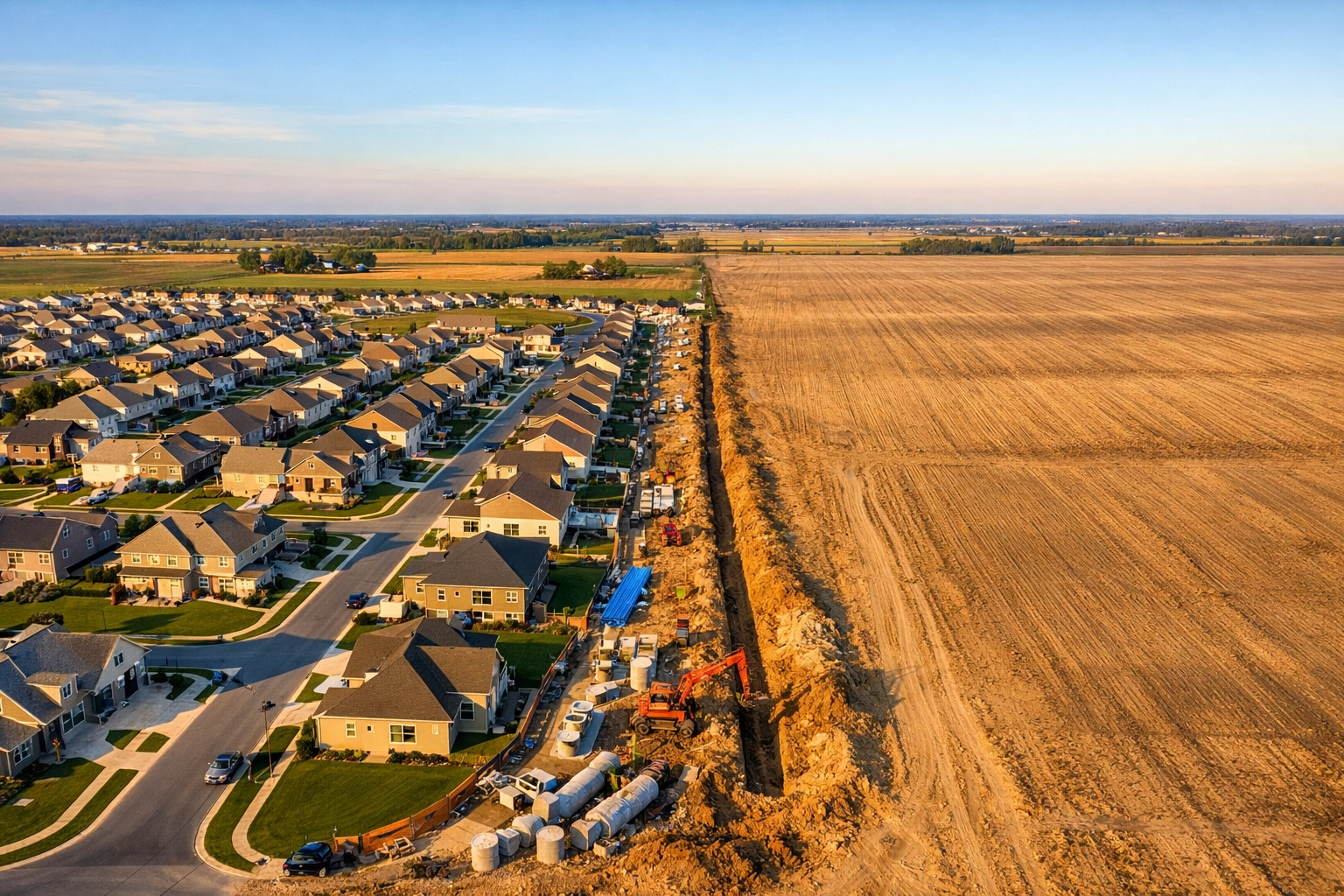
In Texas, cities extend their utility infrastructure outward as growth demands it, but there's always a lag. The population moves faster than the pipes. Developers start sniffing around before the city council even approves the next Capital Improvement Plan. And that lag, that window between "people are coming" and "the infrastructure is here", is where savvy land buyers make their move.
When you buy land before utilities arrive, you're essentially betting on two things:
- The city will extend infrastructure in your direction (because growth patterns say it will).
- You'll be ready to sell or develop when that infrastructure lands (and collect the premium that comes with it).
It's not speculation if you're doing your homework. It's strategic positioning.
The North Texas Infrastructure Lag
North Texas is one of the fastest-growing regions in the country, and both Collin and Denton counties are at the heart of it. McKinney, Frisco, Prosper, Celina, Gunter, these aren't just towns anymore. They're sprawling metro extensions with multi-billion-dollar development pipelines.
But here's the thing: the infrastructure can't keep up.
Cities are scrambling to fund water treatment expansions, extend sewer trunk lines, and widen farm-to-market roads that were never designed for 40,000 cars a day. Meanwhile, landowners sitting in the path of those expansions are watching their property values climb every time a new bond election passes or a regional utility district gets approved.
In Collin County alone, there are entire corridors, especially heading north and east out of Plano and McKinney, where land is transitioning from agricultural use to pre-development positioning. The zoning isn't there yet. The pipes aren't there yet. But the inevitability is.
And that inevitability? That's what you're buying.
How to Identify the Path of Expansion
So how do you figure out where the pipes are going before they're actually laid? It's not guesswork. There are breadcrumbs all over the place if you know where to look.
1. Follow the Master Plans
Every city in Texas publishes a Comprehensive Plan or Master Thoroughfare Plan. These documents lay out long-term growth strategies, future road expansions, and priority infrastructure corridors. They're public record, and they're gold mines.
If a city's plan shows a major north-south corridor getting widened in five years, you can bet that developers will want land along that route now. If the city's water and sewer master plan shows trunk line extensions heading toward a specific area, that's your signal.
2. Track Utility District Filings
In Texas, developers often create Municipal Utility Districts (MUDs) or Public Improvement Districts (PIDs) to fund infrastructure in areas where the city hasn't arrived yet. These districts can issue bonds to build water, sewer, and drainage systems, essentially fast-tracking development.
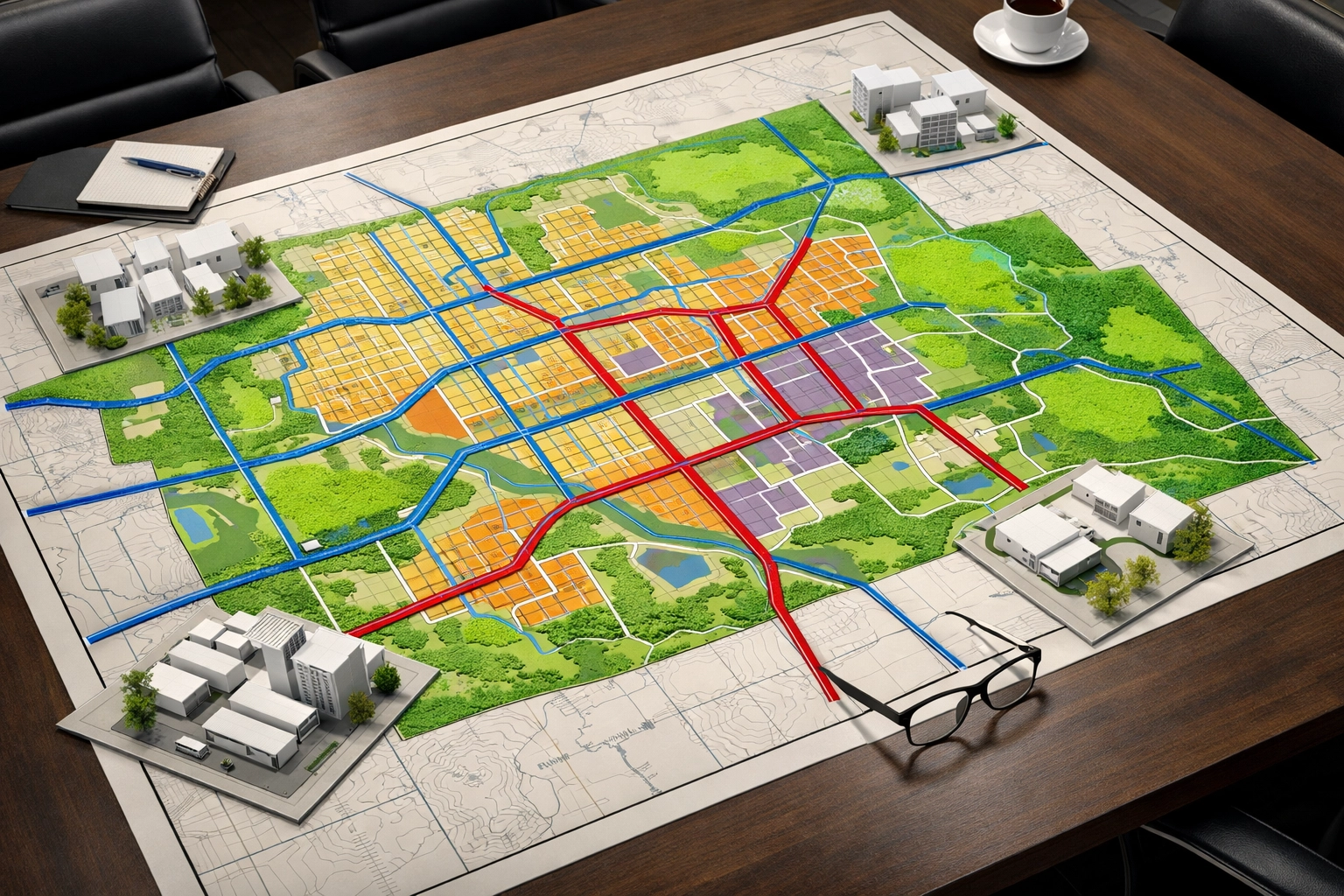
When you see MUD filings pop up in the county records, it means someone is serious about bringing utilities to an area. That's your cue to start looking at adjacent land that will benefit from the same infrastructure without bearing the upfront cost.
3. Watch the Big Players
Where are the national homebuilders buying land? Where are the industrial developers picking up tracts near highways? The big players have entire research teams dedicated to infrastructure forecasting. You don't need to reinvent the wheel, just follow the transactions.
If DR Horton or Hillwood Development is assembling parcels in a certain corridor, they're not doing it on a hunch. They know something. Use that.
4. Talk to the City
This might sound obvious, but most people don't do it. Call the city's planning department. Ask about upcoming Capital Improvement Projects. Ask when the next water line extension is scheduled. Ask which areas are being prioritized for annexation.
City planners want development. They'll talk. And the information they share is often more current than anything you'll find online.
The Value-Add Window
Once you've identified where infrastructure is heading, the next step is understanding when to buy and when to sell (or develop).
The value-add window typically opens 2 to 5 years before utilities arrive. This is when land is still priced like raw ag land or speculative acreage, but the market is starting to whisper about future potential. Sellers haven't fully priced in the infrastructure yet, but buyers who do their homework can see it coming.
Here's what happens during that window:
- Year 1-2: Land is still cheap. No utilities. No zoning change. Just potential. This is when you buy.
- Year 3-4: Infrastructure plans get approved. Bond elections pass. Developers start making offers. Values climb 20-40%.
- Year 5+: Utilities are installed or imminent. Zoning changes get approved. Land is now "development-ready." Values can double or triple from your entry point.
The key is buying early enough to capture the spread, but late enough that the infrastructure trajectory is clear. You don't want to be sitting on land for 15 years hoping a road gets built. You want a 3-5 year horizon with a high-confidence outcome.
What You're Really Buying
When you buy pre-infrastructure land, you're not just buying dirt. You're buying a future entitlement.

Entitled land, land that's ready to build on, commands a massive premium over raw land. The difference can be 5x to 10x in high-growth corridors. But entitlement takes time, money, and risk. By positioning yourself before the utilities arrive, you're essentially letting the city and the market do the heavy lifting for you.
You're also buying holding cost efficiency. If you can secure an ag exemption (hello, honeybees), your annual property taxes stay low while you wait for infrastructure. If you can lock in seller financing or an option agreement, you can control the land without tying up massive capital.
This is a patient investor's game. But the returns justify the wait.
The Risks You Need to Know
Let's be real: this strategy isn't foolproof. There are risks.
Infrastructure delays are common. Cities run out of budget. Bond elections fail. Projects get pushed back 3-5 years. If you're leveraged or counting on a specific timeline, delays can kill your return.
Zoning can go sideways. Just because infrastructure is coming doesn't mean you'll get the zoning you want. A residential corridor might get downzoned to lower density. A commercial node might get blocked by neighborhood opposition.
Market cycles matter. If you buy at the peak of a real estate cycle and infrastructure arrives during a downturn, your land might not appreciate the way you planned. Timing matters as much as location.
The way to manage these risks? Do the homework. Build relationships with city officials. Understand the political landscape. Have a backup exit strategy. And never bet the farm on a single infrastructure bet.
The Bottom Line
In North Texas, the gap between growth and infrastructure is real: and it's widening. Cities are racing to keep up, and land values are responding in real time.
If you can identify where the pipes are going before they're laid, you can position yourself to capture value that most buyers will miss. It's not magic. It's research, timing, and a little bit of patience.
The "pre-development" playbook is simple: Buy in the path. Wait for the pipes. Capture the premium.
And if you need help identifying those corridors or navigating the due diligence process, that's exactly what we do at Cooper Land Company. We've been tracking North Texas infrastructure and growth patterns long enough to know where the next wave is heading.
The pipes are coming. The question is: will you be there when they arrive?
OUR LISTINGS

© 2026 Cooper Land Company
DMCA Notice | Terms & Services | Privacy Policy | Accessibility Statement
EQUAL HOUSING OPPORTUNITY



Cooper Land Company
2501 Greenspoint Ln, Prosper, TX 75078
Mobile: 214-714-5638
dan@cooperlandcompany.com