Sorting through the trash to find the next Winning Ticket
The 2046 Playbook: Finding the Next Frisco
![[HERO] The 2046 Playbook: Finding the Next Frisco](https://cdn.marblism.com/CLpOOnjhrSy.webp)
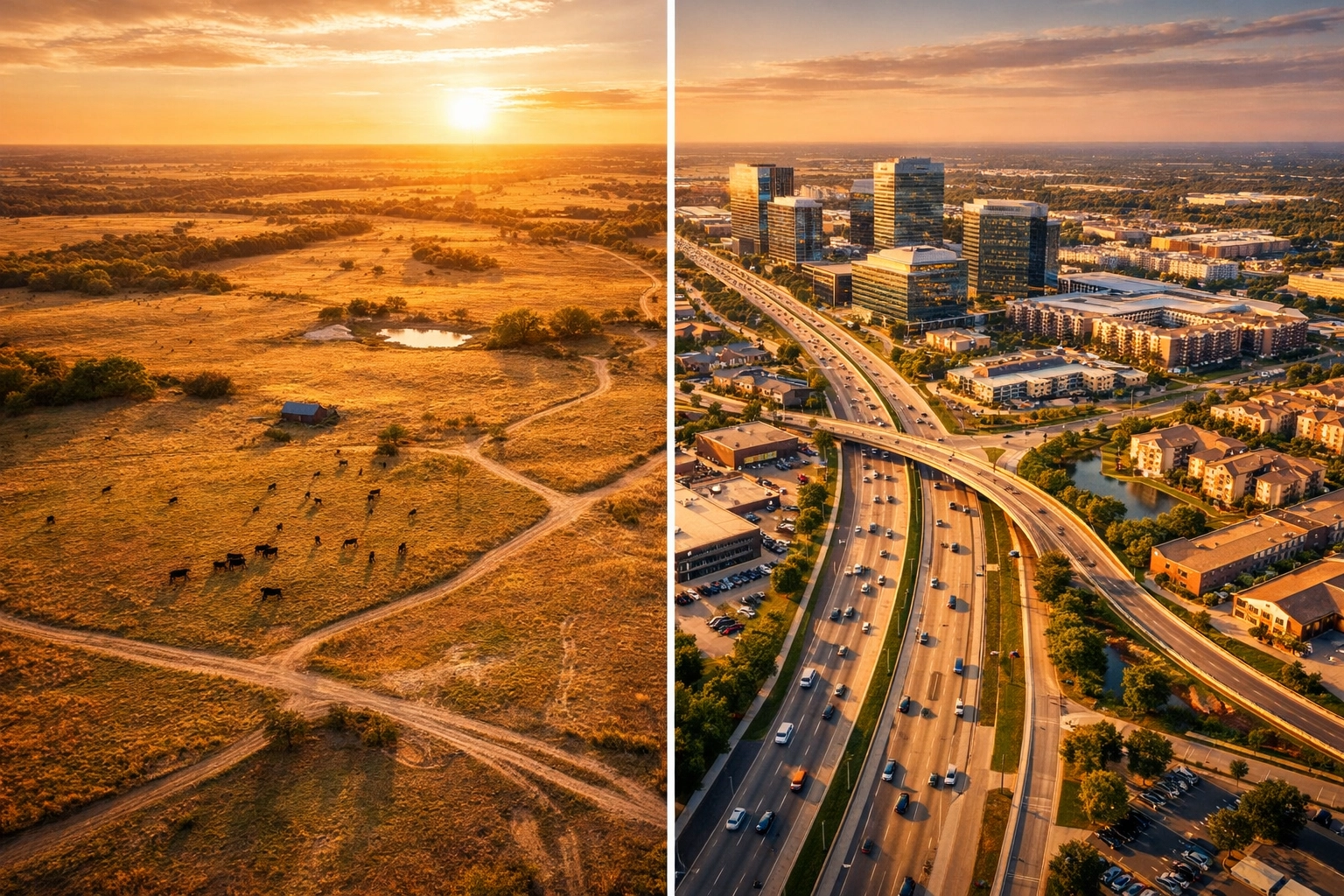
Twenty years ago, Frisco was cow pastures and two-lane farm roads. Today, it's corporate headquarters, $2 million homes, and luxury shopping districts as far as the eye can see. The question everyone asks: Where's the next Frisco?
Here's the thing: Frisco wasn't an accident. It was a recipe. The Dallas North Tollway provided the infrastructure spine. Corporate relocations (Toyota, Liberty Mutual, T-Mobile) created the high-income job base. And master-planned communities like The Gate and Richwoods turned open land into aspirational ZIP codes.
If you want to find the next Frisco, you don't need a crystal ball. You need to follow the catalysts: infrastructure, water, and jobs. And in 2026, those catalysts are already lighting up three regions that most people are still sleeping on.
Let's break down the 2046 playbook.
The Formula: What Turns Pastures Into Prosperity
Before we dive into specific markets, let's get clear on what actually creates a Frisco-level transformation. It's not random. It's three ingredients working together over a 15–20 year horizon:
1. Infrastructure Expansion
Tollways, highways, and utility corridors are the skeleton. If there's no six-lane road coming, there's no rooftop explosion. Simple as that.
2. Water Access
Whether it's lakes for lifestyle appeal or reservoirs for municipal supply, water is the anchor. DFW's growth has always followed the waterways: Lake Lewisville, Lake Grapevine, and now Bois d'Arc.
3. Major Employment Hubs
Corporate campuses and industrial mega-projects bring high earners who need housing. No jobs = no demand. Texas Instruments in Sherman is the same play Toyota was for Plano 15 years ago.
When all three hit the same geography within a 5–10 year window, you get a land value explosion. The question isn't if it happens. It's where it happens next.
Fannin County: The New Lake Play
If you're looking for the most "Frisco-like" setup in North Texas, Fannin County is it. Specifically, the corridor around Bonham, Honey Grove, and the new Bois d'Arc Lake.
The Lake
Bois d'Arc Lake is the first major reservoir built in Texas in 30 years. It's not just a water source: it's a lifestyle anchor. Lakefront property has always been the luxury play in DFW (see: Prosper on Lake Lewisville, Highland Village on Lake Lewisville). Now you've got 16,641 acres of brand-new shoreline, and most of it is still undeveloped.
Right now, land around Bois d'Arc is trading at a fraction of what you'd pay in Celina or Prosper. But give it 10 years of lakefront development: marinas, luxury homes, resort-style amenities: and the prices won't be cheap anymore.
The Jobs
The real kicker? Sherman. Texas Instruments just broke ground on a $30+ billion semiconductor facility. GlobiTech is building a massive data center campus. These aren't small operations: they're generational job creators that bring thousands of high-income earners into the region.
Those workers need somewhere to live. And executives who can afford it will want lakefront luxury: exactly what Fannin County is positioned to deliver.
The comparison is easy: Toyota came to Plano, and suddenly Frisco became a corporate magnet. TI is coming to Sherman, and Fannin County is the bedroom community in waiting.
The Infrastructure
US-69 and US-82 are the current arteries, and they're functional but not flashy. The real wildcard? Whether the Dallas North Tollway eventually extends past Pilot Point and heads toward Sherman. If that happens, Fannin County isn't just "near the action": it's in the action.

Tioga & Pilot Point: The Tollway Tail
If Fannin County is the "lake + jobs" play, then Tioga and Pilot Point are the pure infrastructure bet. The Dallas North Tollway is the golden thread of DFW luxury development. It runs straight through the wealthiest ZIP codes in Texas: Highland Park, North Dallas, Plano, Frisco, Prosper, Celina.
Right now, the Tollway ends in Celina. But it's not stopping there.
The Extension
The long-term plan has always been to push the Tollway north through Gunter and into Grayson County. That means Tioga and Pilot Point: small, rural towns right now: are directly in the path.
When the Tollway comes through, it doesn't just bring commuters. It brings rooftop developers. Master-planned communities don't build where access is inconvenient. They build where there's a six-lane toll road with direct access to corporate job centers. That's the Tollway advantage.
The Landscape
Tioga and Pilot Point still feel like "old Texas": horse properties, open rangeland, and small-town vibes. But that's exactly what Prosper looked like in 2005. The land is affordable, the acreage tracts are plentiful, and the infrastructure catalyst is already in motion.
For long-horizon land banking, this is the simplest play: buy the dirt in the path of the Tollway, hold it for 10–15 years, and sell it to a master-planned developer when the infrastructure catches up.

Wise County: The West Side Story
While everyone's looking north, Wise County is the quiet boom happening to the west. Specifically, the areas around New Fairview, Rhome, and Decatur.
The Alliance Effect
Alliance Airport in North Fort Worth has been a freight and logistics powerhouse for decades. But the growth around it is accelerating. Amazon, FedEx, and a dozen other major logistics operations have set up massive distribution hubs in the area.
That growth is pushing residential development west: into Denton County first, and now into Wise County. New Fairview, in particular, is seeing the "rooftop crawl" that happens when developers run out of cheap land in the primary counties.
The Highway Corridor
US-287 and US-81 provide the north-south connectivity, and I-35W runs straight up from Fort Worth into Wise County. That's critical: because unlike some of the rural plays farther north, Wise County already has highway access to major job centers.
The Timeline
Wise County isn't a 20-year play like Fannin. It's a 10–12 year play. The infrastructure is already in place, the job centers are within commuting distance, and the land is still affordable compared to Denton and Tarrant counties.
If you're looking for a shorter hold period with less speculation, Wise County is the move.
The 20-Year Playbook: How to Execute
So how do you actually use this information? Here's the strategy:
1. Buy Large, Unimproved Tracts
The play isn't to buy a finished lot in a subdivision. It's to buy 20–100+ acres of raw land in the path of development. That's where the massive appreciation happens.
2. Watch the Infrastructure Projects
Track Tollway extensions, highway expansions, and utility corridor plans. When TxDOT announces a major project, that's your signal to start looking at land within 5–10 miles of the corridor.
3. Identify the Job Anchors
Corporate relocations and industrial mega-projects are public information. When a Fortune 500 company announces a campus, start mapping out the surrounding residential zones. That's where the rooftops will follow.
4. Hold for the Long Game
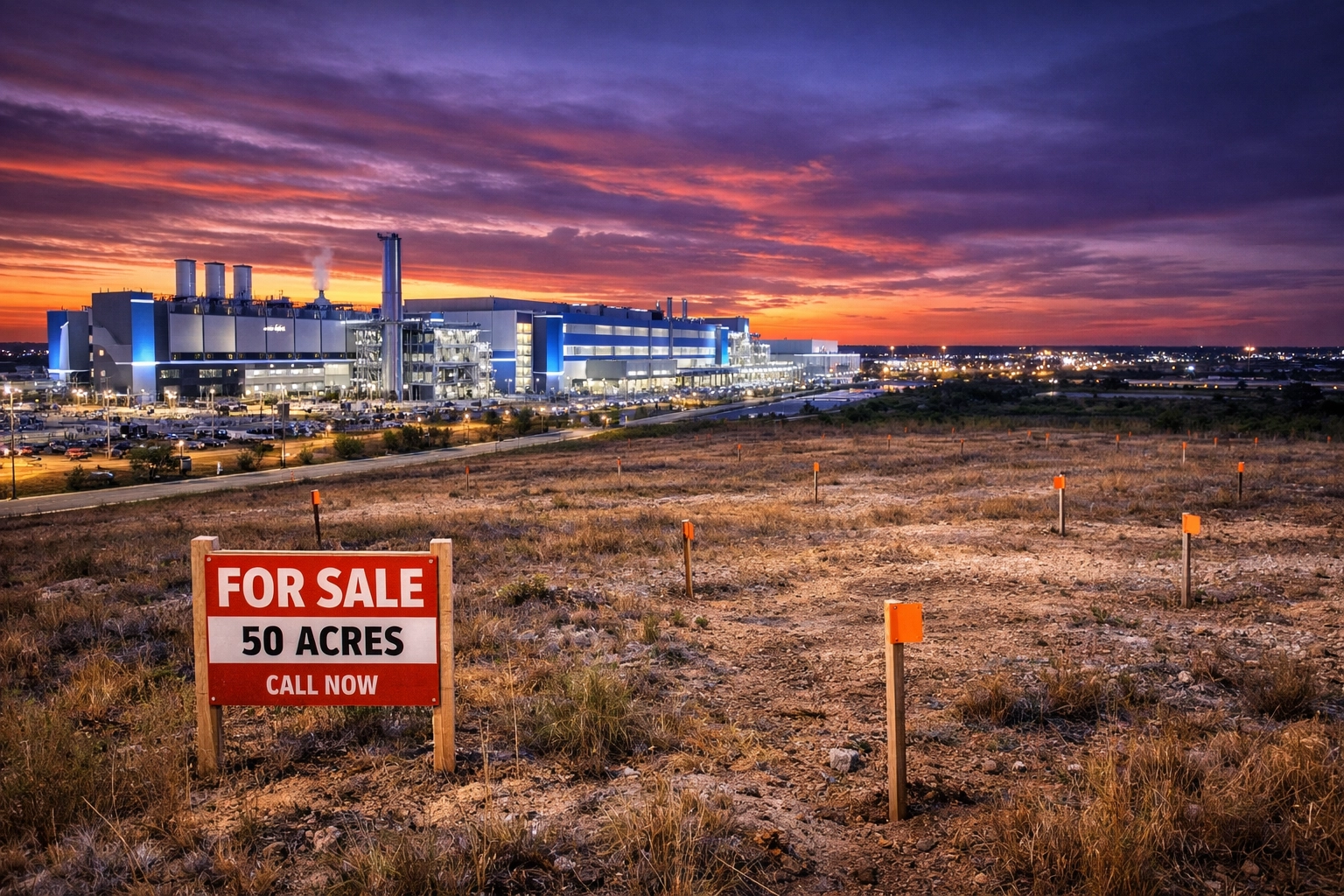
This isn't a flip strategy. It's a land bank strategy. You're holding raw dirt while the infrastructure catches up and the job base expands. The payoff comes 10–20 years down the line when a developer offers you 5x–10x what you paid.
The Bottom Line
Frisco didn't become Frisco overnight. It was two decades of infrastructure expansion, corporate relocations, and master-planned development converging in the same place.
The same forces are building right now in Fannin County, Tioga/Pilot Point, and Wise County. The difference? You can still buy the land at cow-pasture prices.
The question isn't whether these areas will grow. The question is whether you'll be holding the dirt when they do.
If you want to talk about long-horizon land banking or identify opportunities in these emerging corridors, reach out to us. We've been tracking these markets for years, and we know where the catalysts are moving.
The next Frisco is already being built. The only question is: are you in?
OUR LISTINGS

© 2026 Cooper Land Company
DMCA Notice | Terms & Services | Privacy Policy | Accessibility Statement
EQUAL HOUSING OPPORTUNITY



Cooper Land Company
2501 Greenspoint Ln, Prosper, TX 75078
Mobile: 214-714-5638
dan@cooperlandcompany.com