Industrial Chic Shift
Industrial Chic: Why the Sexiest Building in DFW is a Windowless Concrete Box
![[HERO] Industrial Chic: Why the Sexiest Building in DFW is a Windowless Concrete Box](https://cdn.marblism.com/1D-rTpzzDTA.webp)
Let's talk about beauty standards in commercial real estate.
In 2026, while Class A office towers sit half-empty contemplating their $40 million lobbies and touchless coffee stations, there's a love affair happening in the DFW market that nobody saw coming. Investors are falling head over heels for buildings that look like they were designed by someone who only knew how to draw rectangles.
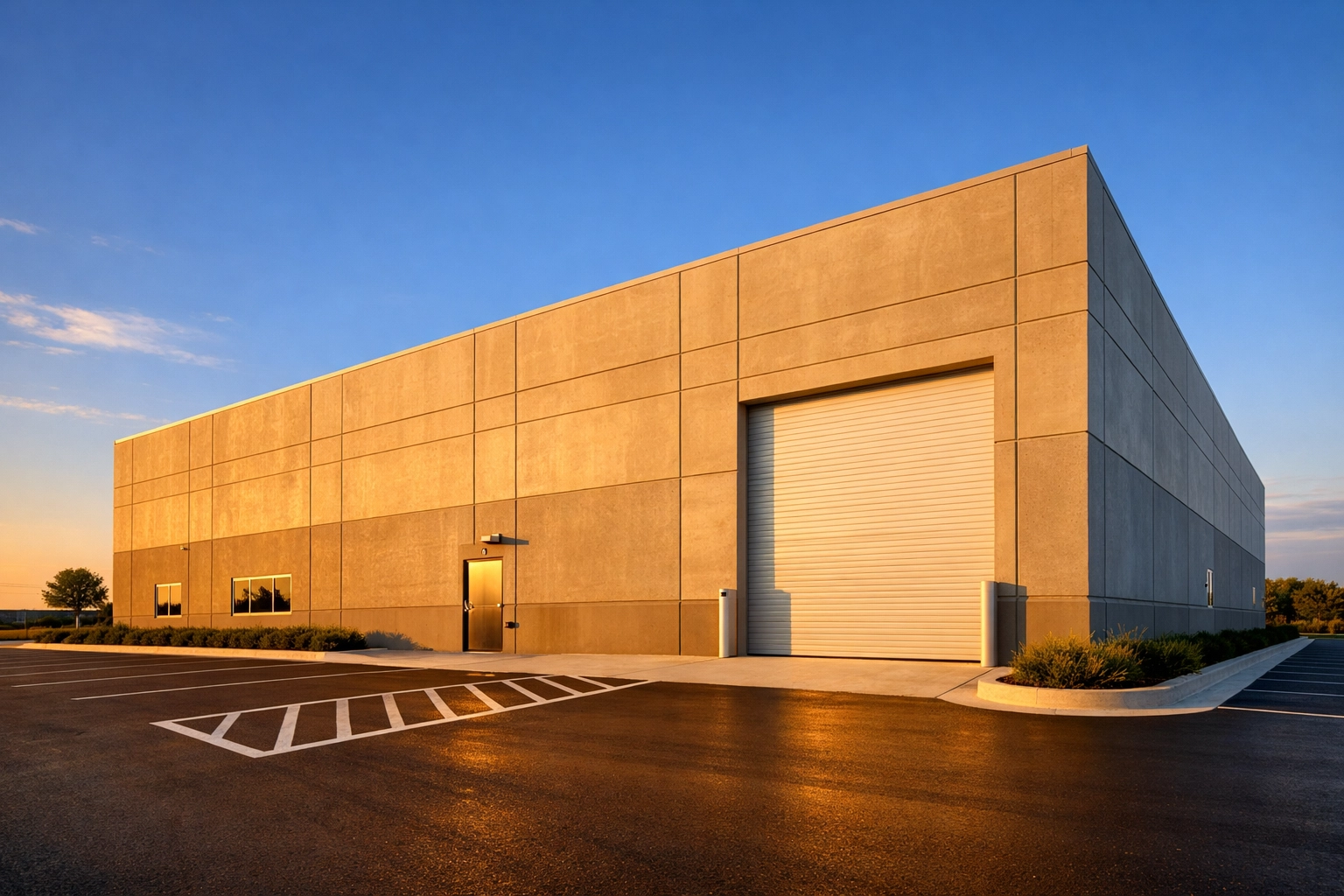
Concrete tilt-wall construction. Roll-up doors. Zero windows. Eighteen-foot clear heights.
This is the new architectural aphrodisiac, and it's printing money while its more attractive cousins are desperately offering free rent and still struggling to fill space.
The Great Office Tower Delusion
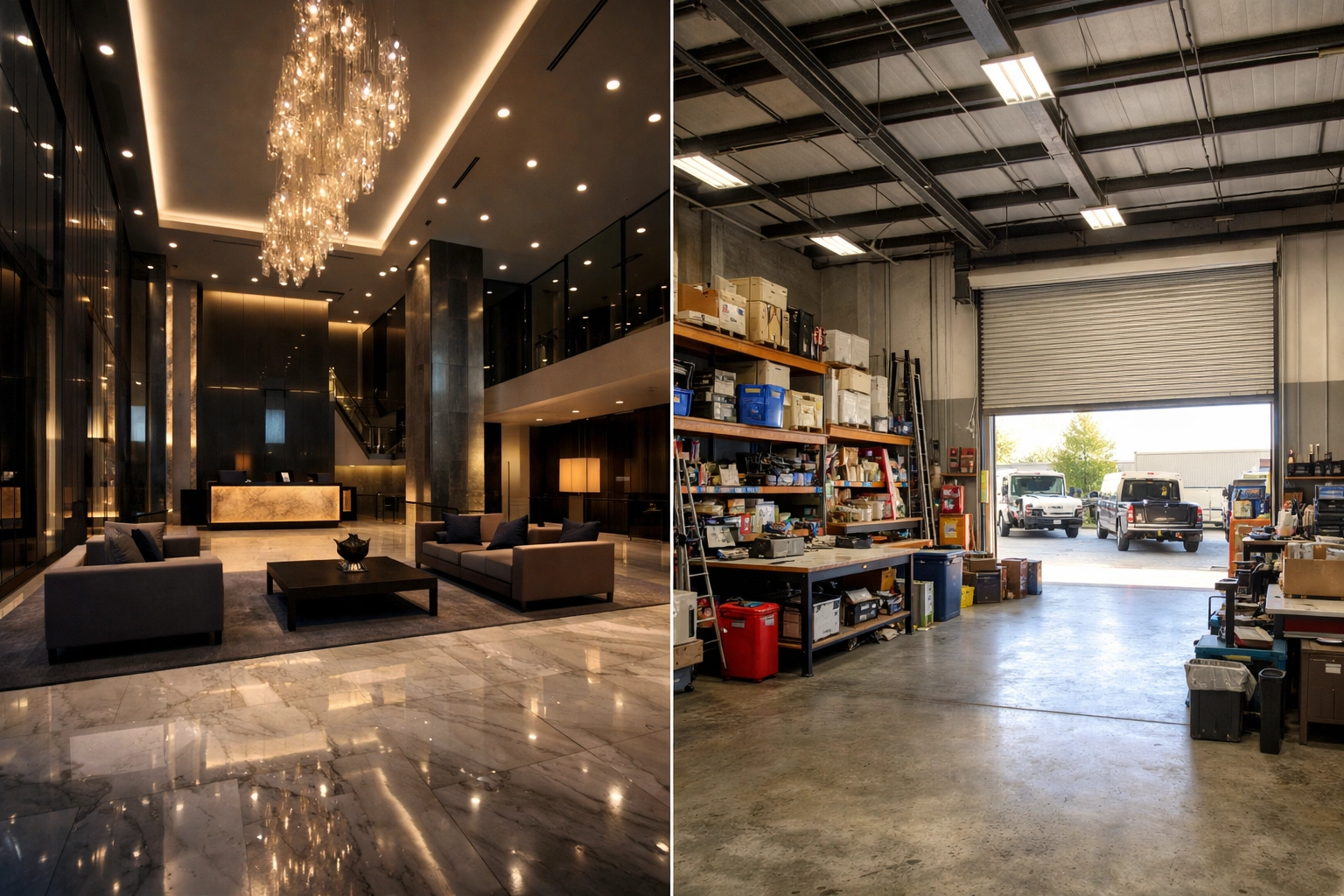
Remember when "premium office space" meant floor-to-ceiling glass, rooftop lounges, and a lobby that looked like a Four Seasons? When companies competed over who had the most Instagram-worthy headquarters?
That was adorable.
The 2020s delivered a brutal lesson in the difference between "impressive" and "profitable." Turns out, maintaining a crystalline palace of commerce requires tenants who actually show up. When hybrid work became the norm and companies realized they could function with 40% less square footage, those stunning towers became stunning liabilities.
The occupancy rates tell the story. Class A office space in Dallas is hovering around 80% occupied, which sounds decent until you realize that's the best class performing. Class B and C office? We're looking at rates that would make a landlord weep into their artisanal lobby coffee.
But industrial flex space? Different universe entirely.
The Unglamorous Economics of a Metal Box
Here's what investors have figured out: a 10,000-square-foot flex building in North Texas doesn't need much to maintain its value. It needs:
- A functioning roll-up door
- A concrete slab that isn't actively cracking
- Power that doesn't trip when someone turns on a welder
- A roof that keeps rain outside where it belongs
That's essentially the checklist. No lobby redesigns every seven years. No expensive curtain wall repairs. No HVAC systems designed to climate-control 40 floors of mostly empty space.
The maintenance budget on a flex building is shockingly reasonable, which means the delta between gross rent and net operating income stays wide. And in 2026, when every basis point matters, "boring and profitable" beats "architectural statement piece" every single time.
The Performance Gap Nobody Expected
Here's where it gets genuinely interesting. In traditional office real estate, there's a clear hierarchy: Class A commands premium rents, Class B does okay, and Class C is for the tenants who missed their last three credit checks.
Industrial flex space has turned that model on its head.
Yes, your newer Class A industrial buildings with 32-foot clear heights, ESFR sprinkler systems, and dock-high loading are performing spectacularly. But so are the Class B and C buildings that were built in 1985 and look like it.
Why? The North Texas service economy.
Every plumber, HVAC contractor, electrician, cabinet maker, and small manufacturer needs somewhere to park their trucks and store their equipment. They're not precious about aesthetics. They care about location, access, and monthly cost. A 3,000-square-foot bay in a 40-year-old building in Carrollton? That's gold for a growing HVAC company that needs to be close to their service area.
The tenant demand across all industrial classes has created something rare in commercial real estate: a sector where even your "C-grade" asset is still reliably generating cash flow. Try finding that dynamic in retail or office right now.
The E-Commerce and Service Economy Backbone
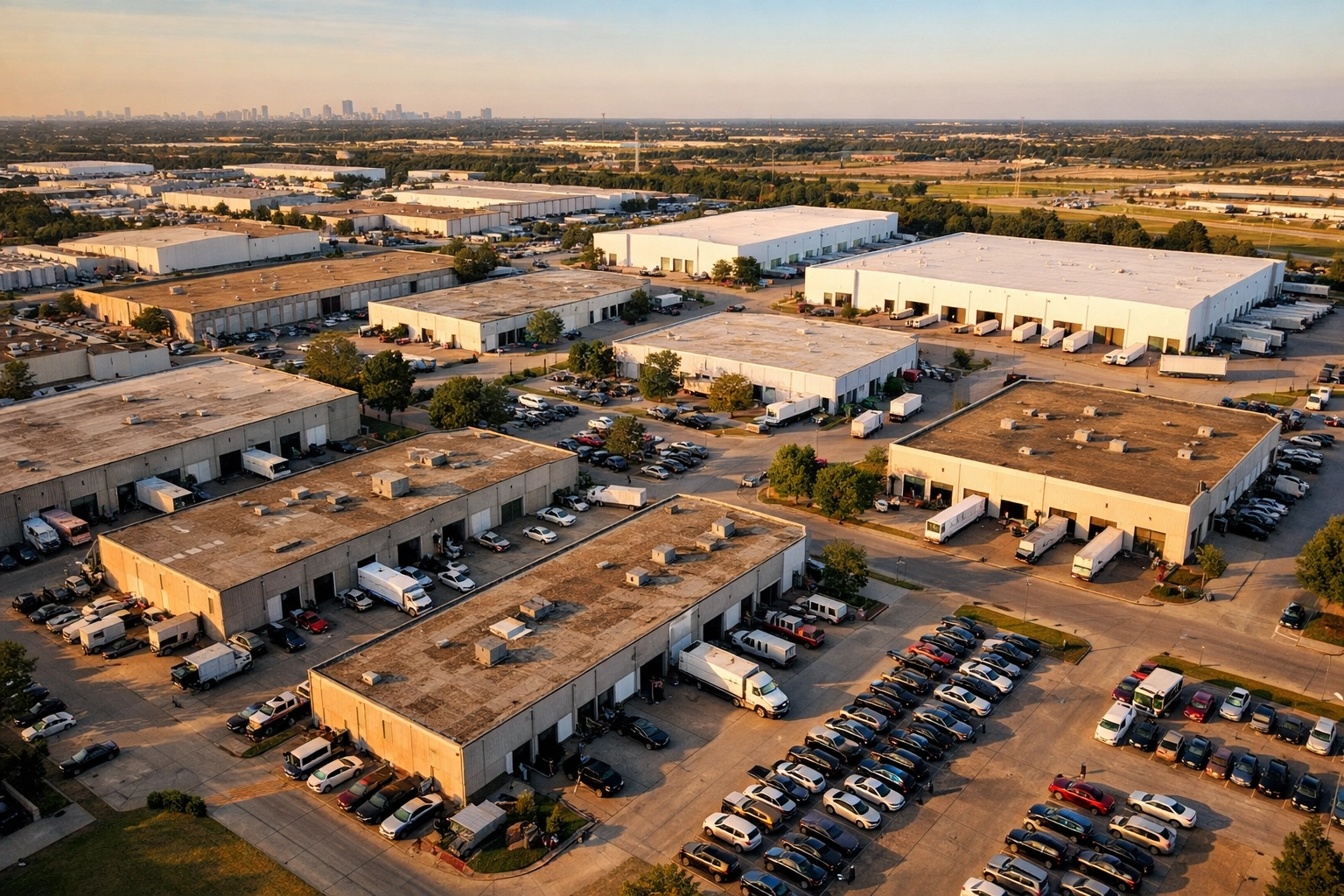
There's a reason Amazon and every company trying to be Amazon has been gobbling up industrial space like it's going out of style: these buildings are the circulatory system of the modern economy.
Every online order needs a warehouse. Every last-mile delivery needs a distribution hub. Every contractor needs a place to store materials that isn't their driveway. The 30-year shift from "we buy things at stores" to "things appear on our doorstep" has created relentless, structural demand for buildings that are optimized for moving goods, not impressing guests.
And here's the kicker: this demand is recession-resistant in ways that office never was. People might defer upgrading their office space during an economic downturn. They don't stop ordering replacement parts for their air conditioner in July or delay getting their plumbing fixed because GDP growth slowed.
The service economy doesn't care about your quarterly earnings report. Toilets break. HVAC systems fail. Electricians get called. And all those service providers need affordable space close to their customers.
The Depreciation Advantage
Let's talk about the tax nerd's perspective for a moment, because this is where industrial flex gets truly sexy (if you're into that sort of thing).
With 100% bonus depreciation permanently restored for qualified property, the economics of buying or developing industrial flex space in 2026 are absurdly favorable. You can cost-segregate the hell out of these buildings: separating out the electrical systems, parking lot improvements, and interior finishes: and accelerate significant deductions into year one.
For high-income investors looking to shelter gains, a tilt-wall flex building is like a Swiss bank account that also happens to generate monthly rent checks. You get the upfront tax benefit, the ongoing cash flow, and the long-term appreciation as North Texas continues its inexorable expansion northward.
Try getting that from a distressed office tower that needs $8 million in capital improvements just to compete for tenants.
The Beauty of Low Expectations
Perhaps the most underrated aspect of industrial flex space is this: it doesn't need to wow anyone.
A Class A office tower is in a constant arms race. Your competitor down the street just renovated their lobby? Now you need to renovate yours. They added a tenant lounge with cold brew on tap? Guess what you're budgeting for next quarter. The expectations keep ratcheting up, and the capital expenditures follow.
A windowless concrete box has no such pressures.
Your tenant: a small manufacturing outfit or a flooring contractor: shows up, opens the roll-up door, does their work, and goes home. They're not comparing your building to the competitor's building based on lobby aesthetics. They're comparing monthly costs, drive time from their house, and whether the loading dock can fit their truck.

The bar is low. And in commercial real estate, sometimes a low bar is the most beautiful thing you can find.
The North Texas Multiplier Effect
All of this is happening in the context of one of the fastest-growing metros in the country. The Dallas-Fort Worth area is adding people at a rate that would make most cities envious. More people means more services. More services means more service providers. More service providers means more demand for functional, affordable industrial space.
The semiconductor plants going up in Sherman and other North Texas cities aren't just creating jobs at the factories: they're creating thousands of secondary jobs. The workers need houses (built by contractors who need warehouse space). They need their cars serviced (by mechanics who need shop space). They need dry cleaning, plumbing repairs, electrical work, and everything else that makes a city function.
Every one of those service businesses is a potential industrial tenant. And the beautiful irony is that while everyone focuses on the glamorous $30 billion fab plant, the real money over the next decade might be in the 5,000-square-foot flex bays that house the businesses serving the people who work there.
The Verdict
In 2026, the sexiest building in DFW isn't the glittering office tower with the celebrity architect's name on it. It's the 20,000-square-foot concrete box off Highway 380 that's 100% leased to a mix of small businesses paying rent on time, every time.
It doesn't need a lobby barista to maintain its value. It just needs a functioning garage door and motivated tenants: and North Texas has plenty of both.
If you're looking at commercial real estate investments and you're still fixated on architectural statements, you're fighting the last war. The current war is about cash flow, maintenance efficiency, and structural tenant demand. And in that war, the windowless concrete box is absolutely crushing it.
Want to talk about industrial opportunities in North Texas? We've been tracking this market long enough to know which concrete boxes are worth falling in love with. Give us a call.
OUR LISTINGS

© 2026 Cooper Land Company
DMCA Notice | Terms & Services | Privacy Policy | Accessibility Statement
EQUAL HOUSING OPPORTUNITY



Cooper Land Company
2501 Greenspoint Ln, Prosper, TX 75078
Mobile: 214-714-5638
dan@cooperlandcompany.com