CAP Rates
Texas Cap Rates in 2026: Where the Smart Money is Landing
![[HERO] Texas Cap Rates in 2026: Where the Smart Money is Landing](https://cdn.marblism.com/vAvESapDZH0.webp)
If you've been watching the Texas commercial real estate market, you know 2026 is shaping up to be one of those years where the smart money separates from the herd. Cap rates have finally found some equilibrium after the wild interest rate rollercoaster of the past few years, and we're seeing real opportunities emerge: especially for investors who know where to look.
Let me break down what we're seeing on the ground across the Lone Star State, from multifamily to industrial to the surprising comeback story of retail. Whether you're looking at Class A trophy assets or value-add Class C plays, here's the current cap rate landscape and where I think the opportunities are hiding.
The Big Picture: Texas in Early 2026
First, the macro view. Texas remains one of the strongest commercial real estate markets in the country, but it's not a monolith. DFW and Houston are still firing on all cylinders: population growth, job creation, and relatively healthy fundamentals across most asset classes. Austin, on the other hand, is dealing with some vacancy headwinds, particularly in office and multifamily after years of overbuilding.
Interest rates have stabilized in that 6–6.75% range for most commercial debt, and lenders are willing to play ball again: though they're being a lot more selective than they were in 2021. The key stat everyone's watching: there's $1.8 trillion in commercial loans maturing nationally over the next few years. That's creating both distress and opportunity, depending on which side of the table you're sitting on.

Multifamily: The Steady Eddie (5.5% – 6.5%)
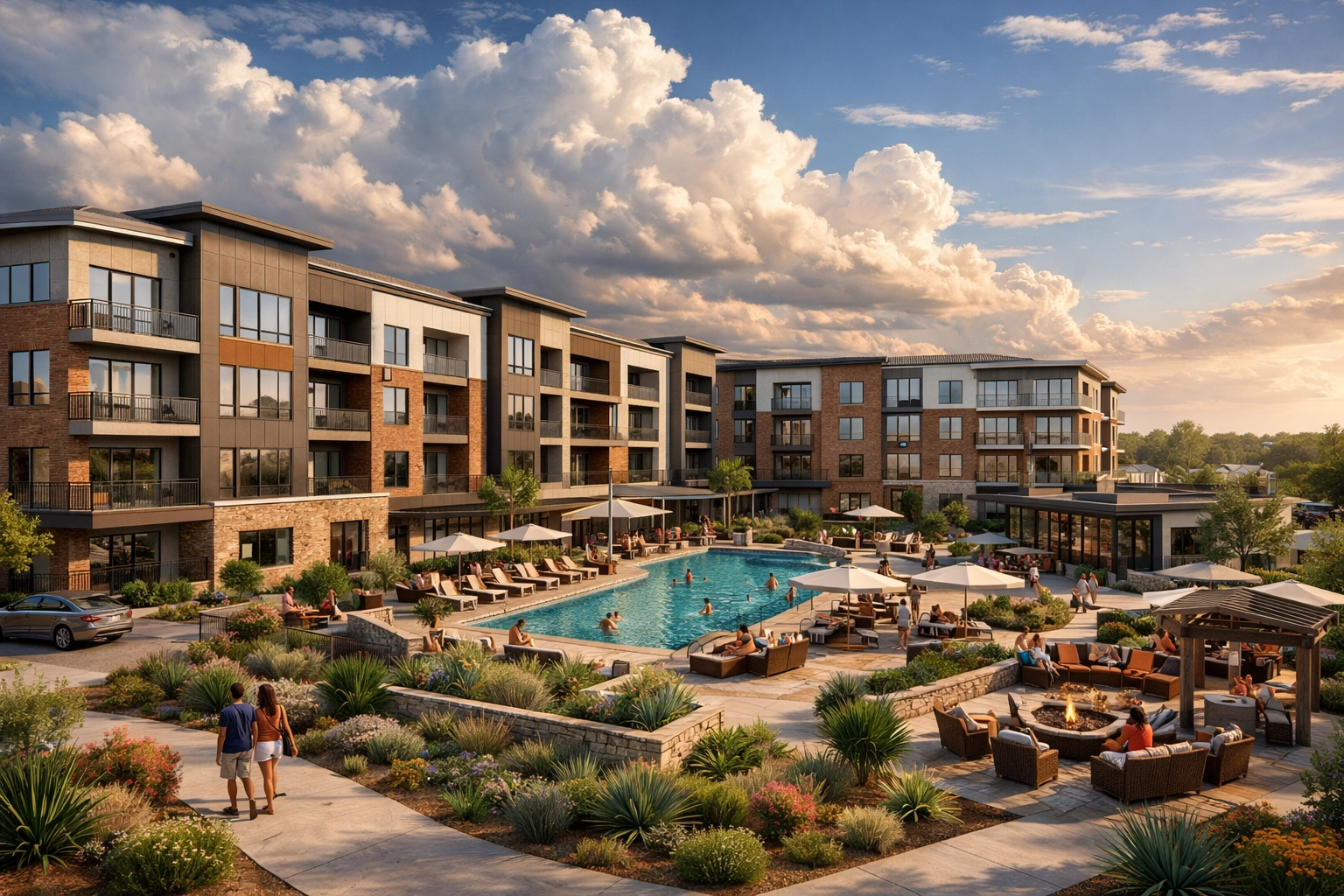
Multifamily cap rates in Texas are trading in the 5.5% to 6.5% range right now, depending on asset quality and location. Class A properties in prime DFW submarkets are pushing the lower end of that range: sometimes even tighter for trophy assets with best-in-class locations and amenities.
Class B properties in solid suburban locations are landing around 6% to 6.25%, which is where a lot of the action is happening. These are the bread-and-butter deals: good bones, decent occupancy, maybe need some light renovation or better management to push rents.
Class C? We're looking at 6.5% and up, sometimes even touching 7% for assets that need heavy capital or are in secondary markets. The good news here is that multifamily fundamentals have stabilized after the overbuilding of 2023–2024. Absorption is finally outpacing deliveries in DFW, and vacancy has improved to around 11.8%. If you're buying at a 6.5% cap with a value-add plan, there's real meat on the bone.
The play: Focus on DFW and Houston suburban multifamily in the Class B space. Austin is trickier right now: you need to underwrite conservatively and assume vacancy stays elevated for another 12–18 months.
Industrial: The Quiet Winner (5.5% – 7%)
Industrial has been the darling of the past few years, and that story isn't over. Cap rates for industrial space in Texas are running 5.5% to 7%, with the tightest pricing on best-in-class logistics and distribution centers near major transportation corridors.
DFW industrial is particularly strong right now: 8.8% vacancy at an average of $8.12 per square foot, and developers are finally moderating new supply after the feeding frenzy of 2021–2023. Flex industrial has been a stealth winner, with vacancy dropping to around 6% as more companies look for hybrid spaces that combine warehouse, office, and light manufacturing.
Class A industrial near DFW International Airport or along I-35? You're looking at cap rates in the low-to-mid 5% range. Move out to secondary markets or older Class B/C buildings, and you can find 6.5% to 7% deals: especially if you're willing to do some tenant improvement work or re-lease at market rates.
The play: Industrial remains one of the safest bets for long-term holds. The e-commerce tailwind isn't going away, and Texas's central location for national distribution keeps demand strong. If you can find a 6.5% cap on a well-located Class B asset with upside on rents, that's a winner.
Retail: The Stealth Comeback (6% – 7%)
Here's the surprise of 2026: retail is back. And I'm not talking about dying malls: I'm talking about grocery-anchored centers, neighborhood shopping strips, and experiential retail that can't be Amazoned away.
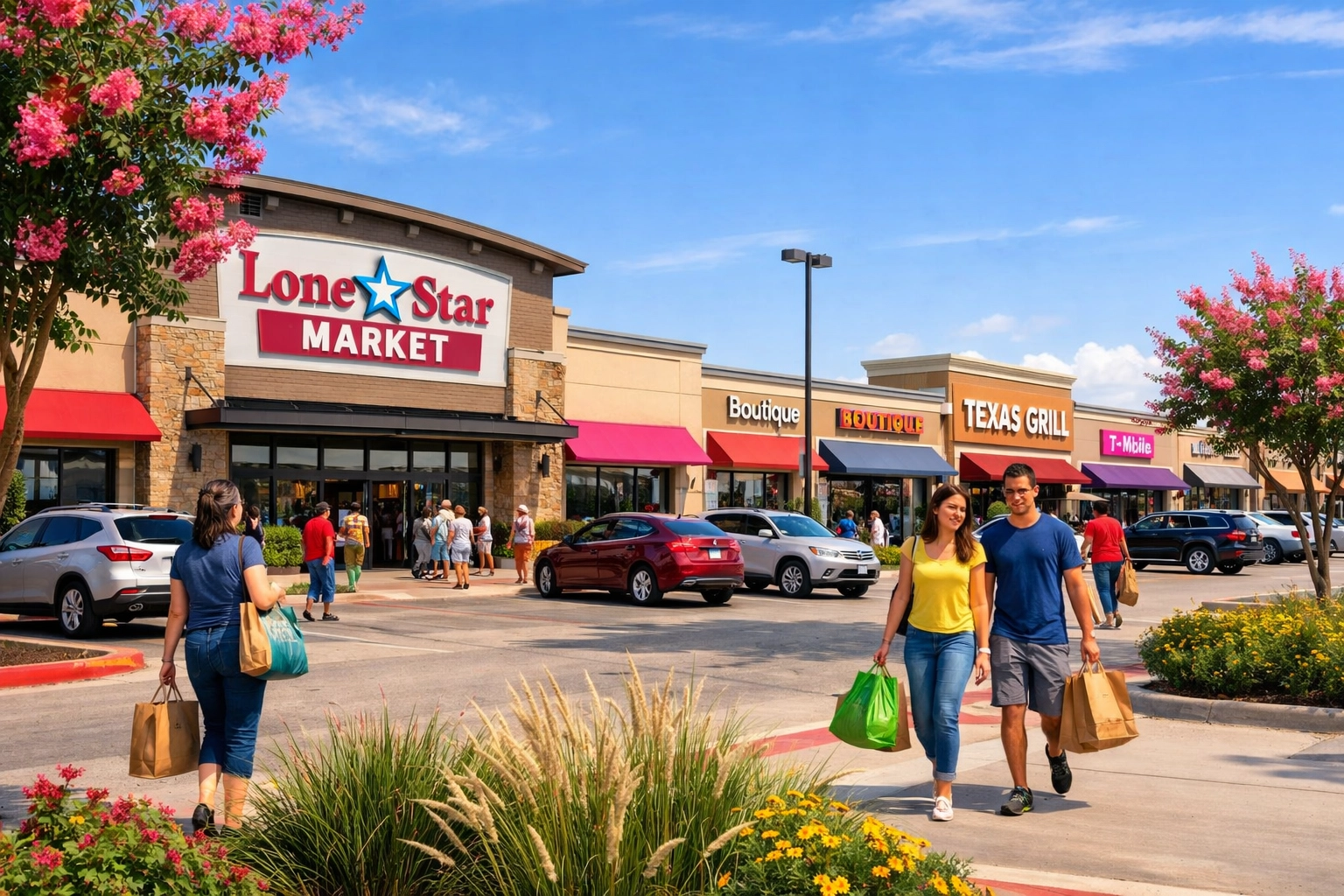
Cap rates for quality retail in Texas are trading at 6% to 7%, with premium grocery-anchored centers in DFW and Houston pushing below 6% in some cases. The reason? Limited new supply, sticky demand, and a flight to quality. Investors are realizing that well-located retail with credit tenants (think national grocers, urgent care, quick-service restaurants) is recession-resistant and generates steady cash flow.
Class A retail in high-traffic locations with strong tenant rosters? You're paying a 6% cap for that stability. Class B centers that need some lease-up or re-tenanting? You can find 6.5% to 7% all day, and if you've got the playbook to upgrade the tenant mix, there's real value-add opportunity.
The play: Grocery-anchored retail is the sweet spot. Look for centers with a strong anchor (H-E-B, Kroger, Tom Thumb), good inline tenant sales, and room to bump rents on lease rollovers. Avoid anything too mall-adjacent or reliant on struggling department store anchors.
Office: The Fragile One (6% – 8%+)
Let's not sugarcoat it: office is tough right now. Class A office in Texas is trading at 6% to 8% cap rates, and Class B/C assets are pushing 7% and higher, sometimes well into the 8% range or beyond.
The problem is simple: remote work has fundamentally changed office demand, and we're still figuring out what the new normal looks like. Trophy Class A buildings with top-tier amenities, strong ESG profiles, and great locations can still command decent occupancy and attract flight-to-quality tenants. But older Class B and C buildings? Many are struggling with 20%+ vacancy, eroding rents, and deferred maintenance.
Austin's office market is particularly challenged right now, with tech tenant contraction and sublease space flooding the market. DFW and Houston are healthier, but even there, you need to be very selective.

The play: Unless you're a distressed debt buyer or have a plan to reposition office to another use (residential conversion, life sciences, etc.), I'd be cautious here. If you're buying, focus on newer Class A assets with long-term credit tenants and realistic cap rates in the 7–8% range.
Flex Space: The Niche Opportunity (6% – 7.5%)
Flex space: those buildings that mix office, warehouse, and light industrial: has been a quiet performer in Texas. Cap rates are generally in the 6% to 7.5% range, depending on location and tenant quality.
The appeal of flex space is its versatility. It attracts a wide range of tenants: small manufacturers, contractors, service businesses, tech startups that need both office and production space. Vacancy has been trending down, and because it's a smaller, less-tracked asset class, there's sometimes less competition for deals.
The play: Look for flex properties near major employment centers or along key transportation corridors. These tend to have stable, long-term tenants who don't want to move once they're established. A 6.5% cap on a well-leased flex building with room to push rents is a solid risk-adjusted return.
Geographic Nuances: DFW, Houston, and the Austin Question
Not all Texas markets are created equal right now. DFW remains the most balanced: strong job growth, solid population inflows, and relatively healthy fundamentals across all asset classes except office. It's the Goldilocks market.
Houston is underrated. Energy sector recovery has brought jobs and capital back to the city, and the port continues to drive industrial demand. Cap rates in Houston are often 25–50 basis points wider than DFW for comparable assets, which means better cash-on-cash returns if you're comfortable with the market.
Austin is the wild card. It's still growing, but the tech slowdown and massive overbuilding in multifamily and office have created near-term challenges. If you're buying in Austin, you need to underwrite conservatively and have a longer-term hold horizon. The good news? Distress creates opportunity, and we're starting to see some motivated sellers.
The $1.8 Trillion Question: Maturing Loans and Opportunity
Here's the elephant in the room: over the next few years, roughly $1.8 trillion in commercial real estate loans are maturing nationally. Many of these loans were originated in the 2021–2022 era when interest rates were near zero and cap rates were compressed to all-time lows.
Now those borrowers are facing refinancing at 6–7% interest rates on properties that may have declined in value or suffered occupancy losses. That's creating a wave of potential distress: but also a wave of opportunity for buyers with capital and patience.
If you're an investor looking to deploy capital in Texas in 2026, this is your moment. Lenders are getting more realistic about workouts, sellers are getting more motivated, and cap rates have widened enough to make returns achievable again. The key is being selective, underwriting conservatively, and focusing on the asset classes and markets with the strongest fundamentals.
Where I'm Putting My Chips
If I'm advising a client today, here's where I'd focus:
- Multifamily Class B in DFW and Houston suburbs (6–6.25% caps with value-add upside)
- Industrial along major corridors (5.5–6.5% caps with long-term demographic support)
- Grocery-anchored retail (6–6.5% caps with steady cash flow)
- Selective flex space near employment hubs (6.5–7% caps)
I'd be cautious on office unless you have a very specific repositioning plan, and I'd tread carefully in Austin until we see vacancy stabilize.
The bottom line? Texas remains one of the strongest commercial real estate markets in the country, but 2026 is a stock-picker's market, not a "buy everything and hope" market. Cap rates have found equilibrium, debt is available, and the maturing loan wave is creating real opportunities for disciplined buyers.
Want to talk strategy on where these opportunities fit into your portfolio? That's what we do at Cooper Land Company. Give me a call and let's walk through what makes sense for your situation.
Disclaimer: This article is for informational purposes only and does not constitute investment, tax, or legal advice. Always consult with your CPA, attorney, and financial advisors to understand how market conditions and specific investment strategies apply to your unique circumstances.
OUR LISTINGS

© 2026 Cooper Land Company
DMCA Notice | Terms & Services | Privacy Policy | Accessibility Statement
EQUAL HOUSING OPPORTUNITY



Cooper Land Company
2501 Greenspoint Ln, Prosper, TX 75078
Mobile: 214-714-5638
dan@cooperlandcompany.com