The 'Ag-to-Residential' Transition: Timing the Re-Zoning Play
![[HERO] The 'Ag-to-Residential' Transition: Timing the Re-Zoning Play](https://cdn.marblism.com/bjRcU11N7io.webp)
There's a moment in every land deal where the value doesn't just increase, it explodes. And nine times out of ten, that moment happens when a parcel transitions from agricultural use to residential zoning.
In North Texas, we're seeing this play out in real-time across Collin, Grayson, and Denton counties. The difference between what you can sell ag-zoned land for versus what it's worth with residential entitlements can be 3x to 5x. But timing this transition isn't just about filing paperwork, it's about reading the room, understanding the political climate, and knowing when a city is ready to say "yes."
The Value Gap: Why Ag-to-Resi is the Big Jump
Let's put some numbers to it. A 50-acre tract in the extraterritorial jurisdiction (ETJ) of Anna, currently zoned agricultural, might trade for $25,000 to $30,000 per acre. That same tract, once it's been rezoned for residential development, could easily be worth $75,000 to $100,000 per acre: or more, depending on the density and infrastructure.
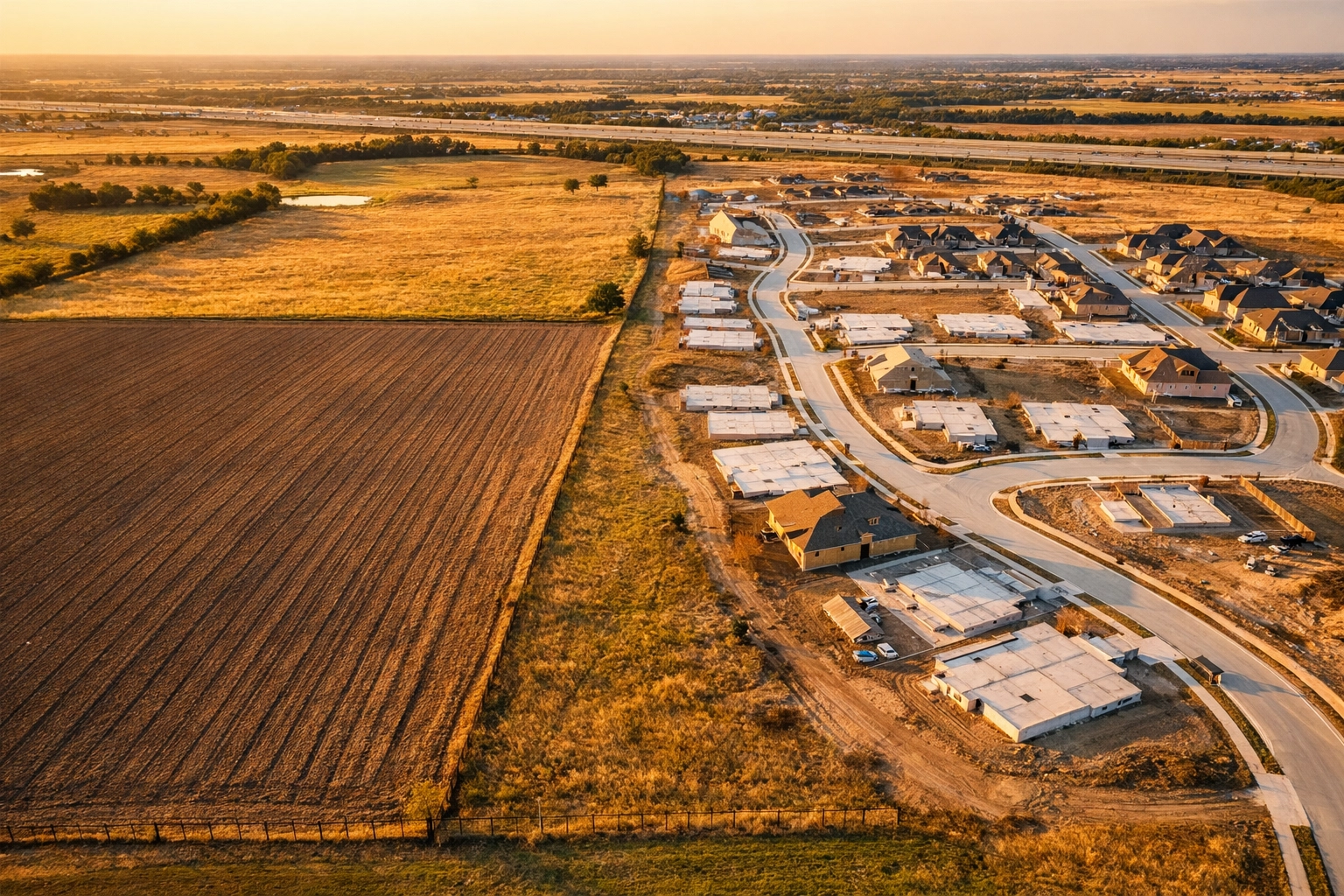
The reason for the jump is simple: buyers aren't just paying for dirt anymore. They're paying for the right to build, and that right is what developers, homebuilders, and institutional investors actually need. Agricultural zoning might work for ranchers and hobby farmers, but it's a dead-end for anyone looking to create a subdivision.
Here's the thing, though: the process of flipping that switch from ag to residential isn't automatic. It requires navigating city councils, planning commissions, public hearings, and a whole lot of relationship management. And in 2026, the window is wide open.
Why 2026 is the Year to Make Your Move
If you've been holding land in the path of growth but haven't pulled the trigger on a rezoning application, this is your year. Here's why:
Growth Pressure is Real: Cities like Celina, Prosper, Anna, and Melissa are under immense pressure to accommodate population growth. They need rooftops, and they need them fast. That creates a pro-development environment where city councils are more willing to approve residential projects: especially if you're bringing infrastructure improvements to the table.
Tollway Extensions Are Happening: The Dallas North Tollway extension is moving north, and cities along that corridor know it. Rezoning applications that might have been "too early" in 2023 are now seen as timely and necessary. The infrastructure is catching up to the demand, and cities want to be ready.
Infrastructure Investment is Flowing: Between state funding, MUD (Municipal Utility District) formation, and private-public partnerships, the money is there to support new development. Cities are less worried about being stuck with unfunded infrastructure liabilities, which makes them more willing to approve residential land use changes.
Comp Plans Are Getting Updates: Many North Texas municipalities are revising their comprehensive plans to reflect the reality of where growth is headed. If your land is inside or near the boundary of a city's growth corridor, there's a good chance the updated comp plan already anticipates residential use. That makes your application a lot easier to justify.
The "Vibe Check" with City Councils
Here's something most buyers don't realize: rezoning isn't just about meeting the technical requirements: it's about reading the room.
Every city council has a personality. Some are aggressively pro-growth and will rubber-stamp anything that brings tax revenue. Others are more cautious, especially if they're worried about school capacity, traffic, or the "character" of the community. Before you file a rezoning application, you need to know which camp your city falls into.
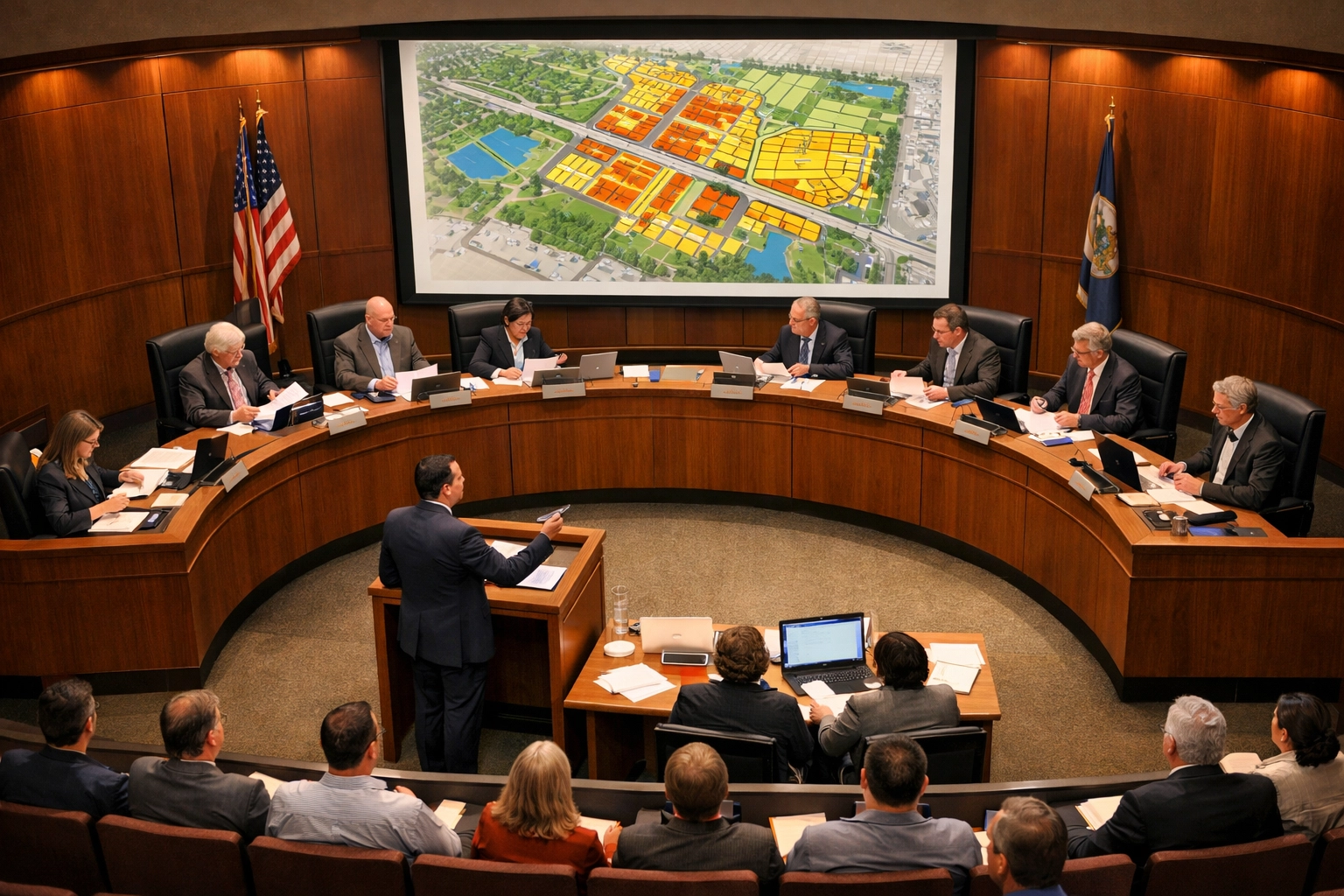
At Cooper Land Company, we've spent years building relationships with planning departments, attending council meetings, and watching how decisions get made. We know which cities are looking for large-scale master-planned communities and which ones prefer smaller, incremental infill projects. We know which council members care most about green space and which ones prioritize economic development.
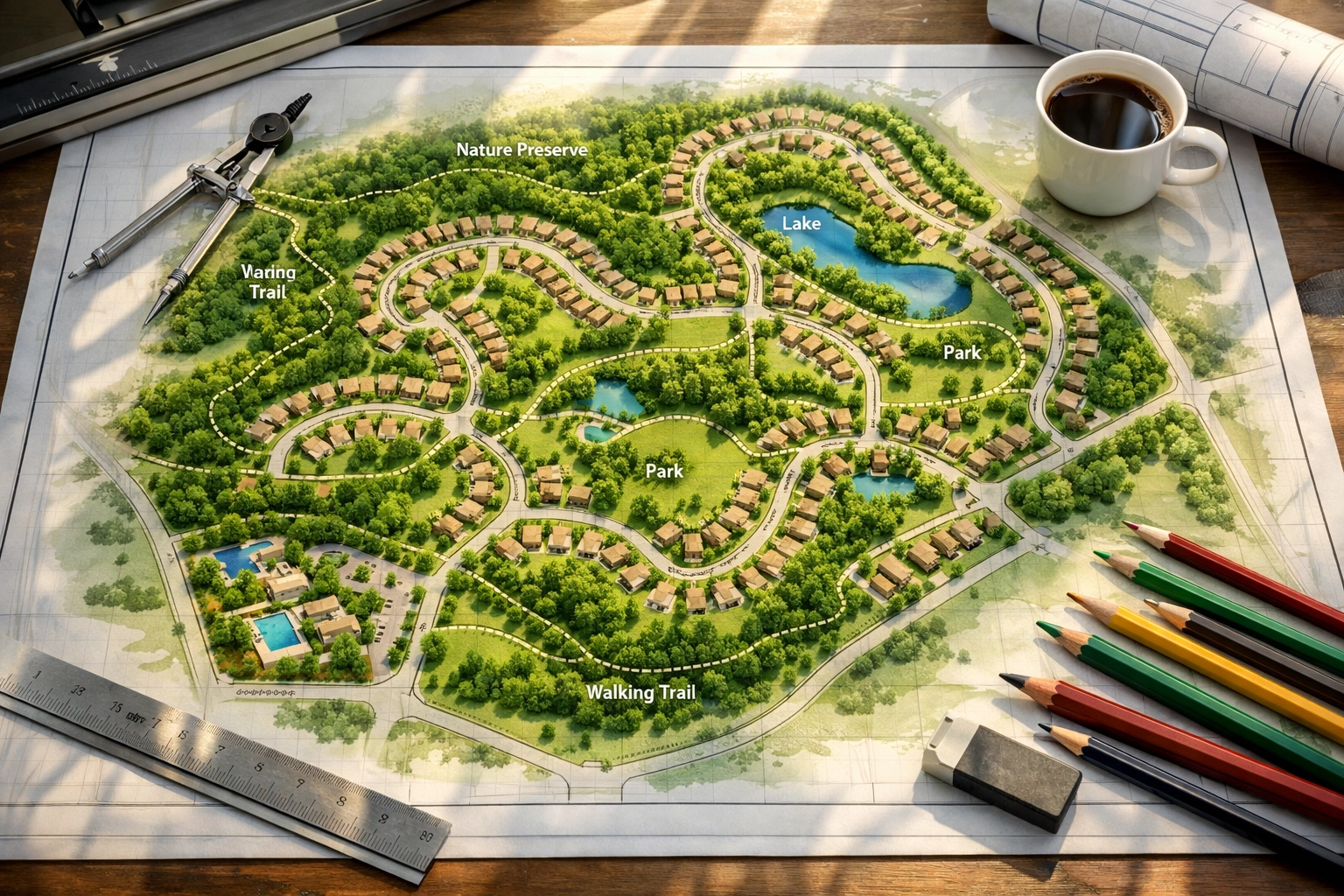
That knowledge is critical because the way you present your application matters just as much as what you're asking for. If you walk into a council meeting with a cookie-cutter subdivision plan in a city that values open space, you're going to get pushback. But if you come in with a conservation development plan that preserves trees and includes walking trails, you're speaking their language.
The Rezoning Process: What to Expect
Let's walk through what actually happens when you apply for a zoning change from agricultural to residential.
Step 1: Pre-Application Meeting
Before you file anything formal, you meet with the city's planning staff. This is where you float your idea, get feedback, and find out what obstacles might be in your way. Is the city worried about water capacity? Are there environmental concerns? Is there a moratorium on new development? You want to know all of this before you spend money on engineering and legal fees.
Step 2: Formal Application and Engineering
Once you've got the green light to proceed, you file the formal application. This includes a site plan, traffic impact analysis, drainage study, and any other technical reports the city requires. You'll also need to submit a legal description of the property and proof of ownership.
Step 3: Planning Commission Review
Your application goes before the city's planning and zoning commission. This is typically a group of appointed citizens who review land use requests and make recommendations to the city council. You'll present your case, and neighbors or interested parties can speak for or against the project. The commission votes to approve, deny, or recommend changes.
Step 4: City Council Hearing
If the planning commission approves (or even if they don't), the application moves to the city council for a final decision. This is the big one. The council holds a public hearing, listens to testimony, and votes. If they approve, your land is rezoned. If they deny, you can reapply after addressing their concerns, or you can explore other options.
Step 5: Plat Approval (If Needed)
In some cases, rezoning is just the first step. You may also need to file a preliminary plat or development agreement before you can move forward with actual construction. This is especially common in larger developments where the city wants to ensure infrastructure improvements are phased correctly.
What Cities Are Looking for in 2026
If you want your rezoning application to sail through, here's what cities are prioritizing right now:
Infrastructure Commitments: Cities don't want to be stuck paying for roads, water lines, and sewer extensions. If you're willing to fund or partially fund these improvements: especially through a MUD or PID: you're going to get a much warmer reception.
Density That Makes Sense: Cities are done with 10-acre ranchettes. They want efficient land use that generates tax revenue. That doesn't mean you need to build apartments, but it does mean you need to show that your development plan makes financial sense for the city.
Compatibility with Surrounding Uses: If your proposed residential development is surrounded by other residential neighborhoods, great. If it's next to a gravel pit or an industrial park, you're going to face opposition. Cities care about land use compatibility, and they'll deny projects that create conflicts.
School Capacity: This is the elephant in the room. If the local school district is already overcrowded, your rezoning application is going to be a tough sell. Some developers address this by timing their projects to align with new school construction or by negotiating agreements to help fund new facilities.
How Cooper Land Company Guides You Through the Process
Rezoning land from agricultural to residential is where the real value is created, but it's also where most people get stuck. The process is technical, political, and time-consuming. That's where we come in.
At Cooper Land Company, we don't just list land and hope someone buys it. We work with clients to maximize the value of their holdings by identifying the highest and best use and then executing the plan to get there. If that means rezoning a tract from ag to residential, we'll guide you through every step of the process: from the initial pre-application meeting to the final council vote.
We know the players, we know the process, and we know what it takes to get a "yes." Whether you're a landowner looking to unlock the value in your property or a developer searching for the next big opportunity, we can help you navigate the rezoning game.
The Bottom Line
The transition from agricultural to residential zoning is where fortunes are made in North Texas land. But timing is everything. In 2026, the conditions are as favorable as they've been in years: cities are hungry for growth, infrastructure is catching up, and the political winds are blowing in the right direction.
If you've been sitting on land in the path of progress, now is the time to make your move. The cities are ready. The buyers are waiting. And the value gap has never been wider.
Let's talk about how we can help you turn dirt into dollars. Contact Cooper Land Company and let's start the conversation.
Dan Cooper
Owner/Broker, Cooper Land Company
OUR LISTINGS
© 2026 Cooper Land Company
DMCA Notice | Terms & Services | Privacy Policy | Accessibility Statement
EQUAL HOUSING OPPORTUNITY



Cooper Land Company
2501 Greenspoint Ln, Prosper, TX 75078
Mobile: 214-714-5638
dan@cooperlandcompany.com