The 'Reverse Commute' Trend: Why Jobs are Moving to the Land
![[HERO] The 'Reverse Commute' Trend: Why Jobs are Moving to the Land](https://cdn.marblism.com/rokldgR7i97.webp)
For decades, the pattern was simple: you bought land in the country, built your dream home, and drove an hour into Dallas or Fort Worth for work. The "country commute" was the price you paid for acreage, privacy, and a different lifestyle.
But something's shifting in North Texas. The jobs are moving to you.
We're watching corporate headquarters, regional offices, and major employers plant flags in places that were farmland fifteen years ago. Prosper. Anna. Celina. Little Elm. These aren't just bedroom communities anymore: they're employment centers. And that's changing everything about how land gets bought, developed, and valued in the outer ring of the Metroplex.
The Corporate Campus Migration
It started with a trickle. A corporate office here. A regional distribution hub there. But in 2025 and into 2026, it's become a flood.
McKinney landed a massive corporate campus in 2018. Frisco has been stacking employers like cordwood for a decade. Now, the trend is pushing even further north and east. Prosper is seeing serious interest from tech and finance firms that want the "North Dallas" vibe without the North Dallas price tag. Anna is getting approached by logistics companies that need proximity to highways but want cheaper land than what's available in Plano or Richardson.
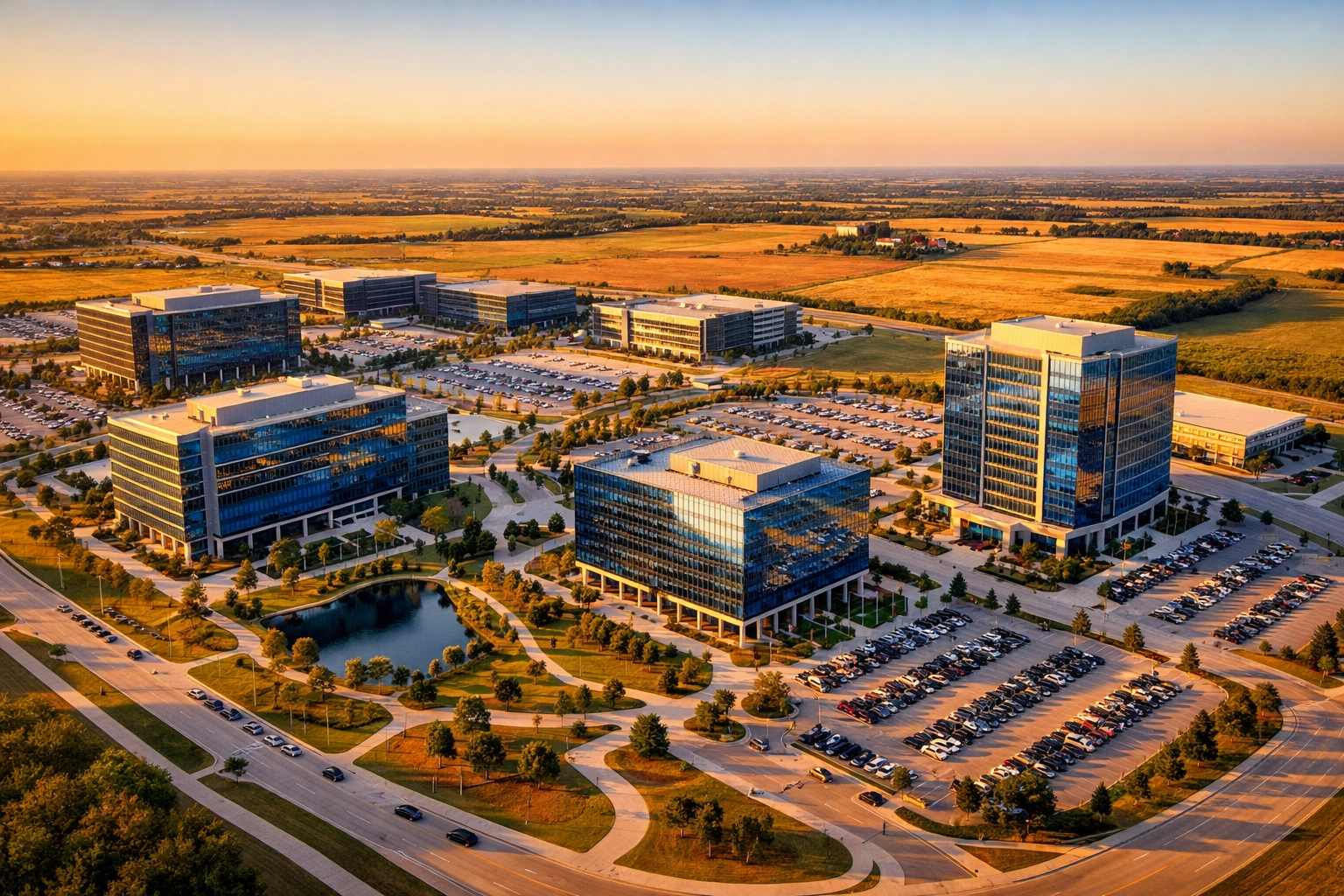
The reasons are pretty straightforward. Office space in downtown Dallas or Legacy West costs $35-$50 per square foot. Out in Prosper or Melissa? You're looking at $18-$25. For a 50,000-square-foot office, that's a savings of nearly a million dollars a year in rent alone. Add in the cheaper land for surface parking, better access for employees coming from all directions, and the ability to control your own campus: it's a no-brainer for CFOs looking at the books.
And once one company makes the move, others follow. Employees who relocated to be near that first campus want their next job to be close, too. Service businesses: restaurants, gyms, daycare centers: spring up to serve the new workforce. Before you know it, you've got an actual employment hub, not just a subdivision with a long commute.
The New Buyer Profile: Acreage + Proximity
This shift is creating a buyer we didn't see much of five years ago: the professional who wants 5-10 acres but refuses to drive more than 20 minutes to the office.
They're not traditional "country" buyers. They're not looking to disappear into rural life or run cattle. They want the space: room for a workshop, a pool, maybe some horses for the kids: but they also want to be able to grab lunch in town and make it to a 2 PM meeting without leaving at noon.
This buyer is willing to pay a premium for land that checks both boxes. A 10-acre tract in Anna that's twelve minutes from a corporate office park? That's worth significantly more than the same 10 acres in a comparable location that's thirty minutes from the nearest job center. The "commute penalty" has always existed, but now we're seeing a "commute bonus" for land that's close to where people actually work.

We've brokered deals where buyers specifically asked about proximity to known corporate campuses before even scheduling a site visit. They'll pull up Google Maps and draw a 15-minute radius around their office, and that's the search area. Everything outside that circle? Not interested, no matter how nice the land is.
This is a big shift from the traditional "I'll drive as far as I need to for the right property" mindset. The new calculus is: I'll pay more per acre to avoid the drive.
The Infrastructure Reality
Here's where it gets interesting for developers and investors: corporate relocations don't happen in a vacuum. They require infrastructure.
A 200-person office needs reliable high-speed internet. A 500-person campus needs water, sewer, and stormwater management. A 1,000-person headquarters needs nearby housing, retail, and services. None of that appears overnight, which means cities like Prosper and Anna are scrambling to fast-track infrastructure projects to accommodate the demand.
And that infrastructure? It makes the surrounding land exponentially more valuable.
A 50-acre tract that's currently on well water and septic might be worth $15,000 an acre today. But if that same tract is two miles from a new corporate campus and the city extends water and sewer lines to serve the development, you're looking at $40,000-$60,000 an acre within 24 months. The land didn't change: the infrastructure around it did.
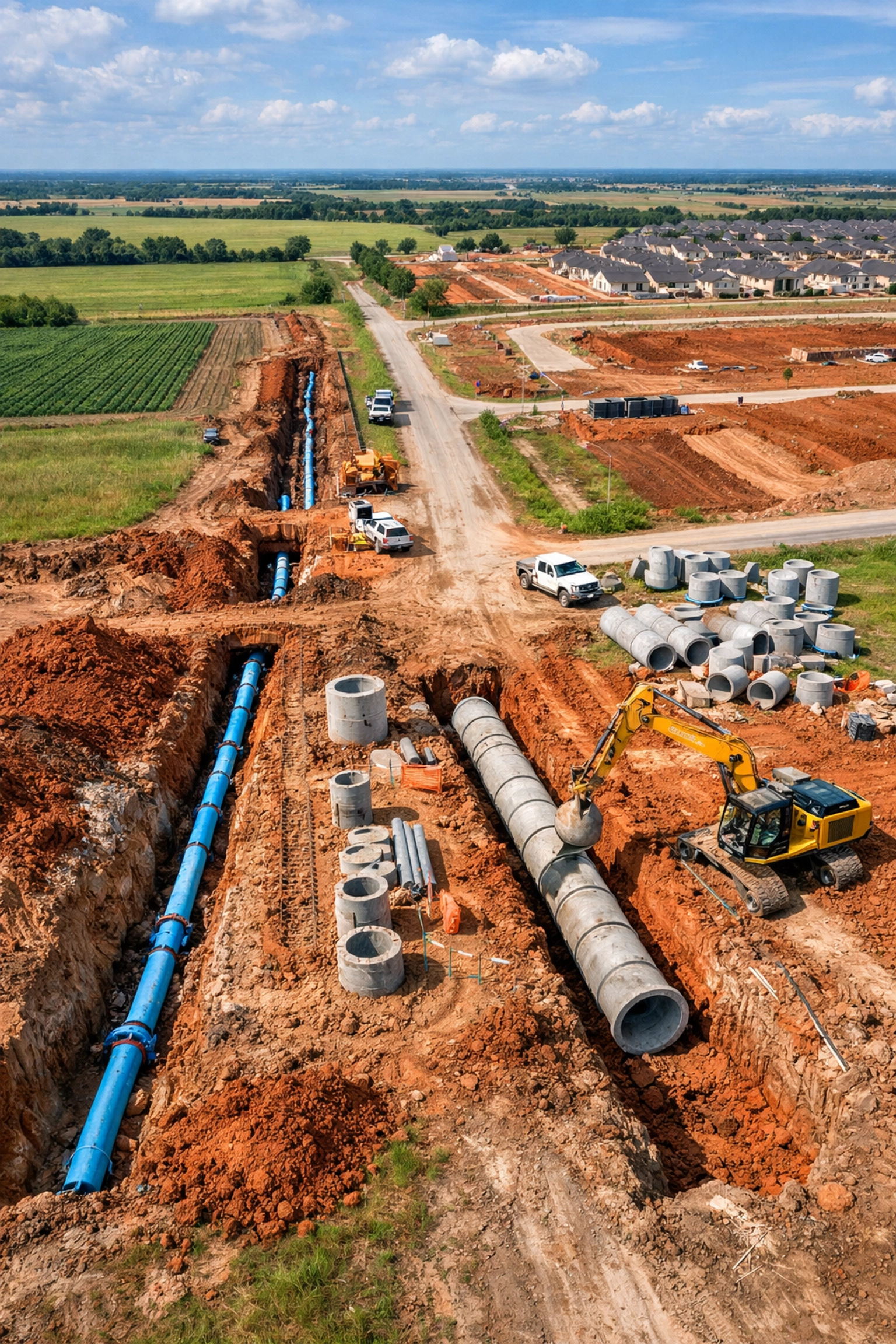
We're advising clients to pay close attention to where the sewer lines are going, not just where they are today. If you can identify a tract that's "next in line" for utilities because of a nearby corporate project, that's the kind of timing that turns a good land deal into a great one.
The Ripple Effect on Land Values
The impact on land values isn't uniform: it's targeted and intense.
Within a 10-mile radius of a major employer, you see an immediate uptick in demand. Developers start circling. Homebuilders start calling. Land that was sitting on the market for 18 months suddenly has three offers in a week.
But it's not just residential. Commercial developers want to be near the workforce, too. We're seeing interest in small retail centers, professional office condos, and mixed-use projects in towns that couldn't have supported them five years ago. The logic is simple: if 2,000 people work in Prosper and half of them live within 10 miles, that's a built-in customer base for everything from coffee shops to dentists.
This creates a "halo effect" around the corporate campus. The land closest to the employer sees the biggest bump first. Then it spreads outward: residential tracts within a 15-minute drive, then service commercial along the main corridors, then larger mixed-use sites near highway interchanges.
For investors, the play is to identify where the next corporate campus is likely to land and get positioned before the official announcement. That's easier said than done, but there are clues: cities offering incentive packages, infrastructure projects that seem oversized for current demand, and whispers from commercial brokers about "confidential projects" in the pipeline.
The Risk: What Happens If They Leave?
The flip side of this trend is the risk of over-indexing on a single employer.
If a company with 500 employees moves to Anna and that becomes the anchor for a whole ecosystem of residential and commercial development, what happens if they relocate again in ten years? Or downsize? Or go fully remote?
It's a legitimate concern, and it's one reason we counsel clients not to bet everything on one employer. The towns that are thriving aren't relying on a single corporate tenant: they're building a diversified base of employers across multiple industries. Prosper isn't just tech. Anna isn't just logistics. Celina isn't just finance. The mix matters.
That said, the trend is real and it's durable. Remote work didn't kill the office: it just made people choosier about where the office is located. And increasingly, they're choosing the edges of the Metroplex, where land is cheaper, traffic is lighter, and quality of life is higher.
The Takeaway for Land Buyers and Sellers
If you're buying land in North Texas with the intent to hold it for 5-10 years, proximity to employment centers should be a top-tier consideration. It's not just about being near a highway or a good school district anymore: it's about being near where people work.
For sellers, the message is equally clear: if your land is within striking distance of a growing corporate hub, now is the time to maximize value. The window between "we just heard about a project" and "the land is already priced in" is shorter than it used to be. Once the news breaks, the premium shrinks.
And for developers? The play is obvious. Find the land that serves the "acreage + proximity" buyer. Zone it right. Get utilities in place. And sell to the professional who wants the best of both worlds: space to breathe and a commute that doesn't make them regret it.
The jobs are moving to the land. The only question is whether you're positioned to benefit from it.
Looking for land near North Texas's growing employment centers? Cooper Land Company specializes in identifying high-value tracts in the path of corporate growth. Let's talk about your next move.
OUR LISTINGS
© 2026 Cooper Land Company
DMCA Notice | Terms & Services | Privacy Policy | Accessibility Statement
EQUAL HOUSING OPPORTUNITY



Cooper Land Company
2501 Greenspoint Ln, Prosper, TX 75078
Mobile: 214-714-5638
dan@cooperlandcompany.com