The 'Sherman Surge' Phase 2: Retail and Services Following the Silicon Boom
![[HERO] The 'Sherman Surge' Phase 2: Retail and Services Following the Silicon Boom](https://cdn.marblism.com/0hZ4_OWHJx-.webp)
When Texas Instruments and GlobiTech announced their massive semiconductor projects in Grayson County, everyone focused on the jobs. And rightfully so: thousands of high-paying positions don't just show up in a county like that without creating a ripple effect. But here's what a lot of people missed: those jobs don't just need houses. They need places to eat, shop, and get their oil changed.
Phase 2 of the Sherman surge isn't residential. It's commercial.
The Industrial Wave Created the Need
Let's set the stage. Between TI's $30 billion facility and GlobiTech's companion project, Grayson County is looking at roughly 5,000 to 8,000 new jobs landing over the next five to seven years. These aren't warehouse gigs: they're engineers, technicians, and management pulling in six-figure salaries.
That kind of workforce doesn't commute back to Dallas for groceries. They don't drive 45 minutes for dinner. They need infrastructure where they live, and the developers who understood that early are the ones sitting on commercial land along US-82, FM-1417, and the future loop systems around Sherman and Denison.
The residential boom happened first. Builders scrambled for 50- to 200-acre tracts to put up subdivisions that could house the incoming workforce. That was the obvious play. But now, as those neighborhoods start to fill in, the next question becomes: where are these people actually going to spend their money?
What's Missing (and What's Coming)
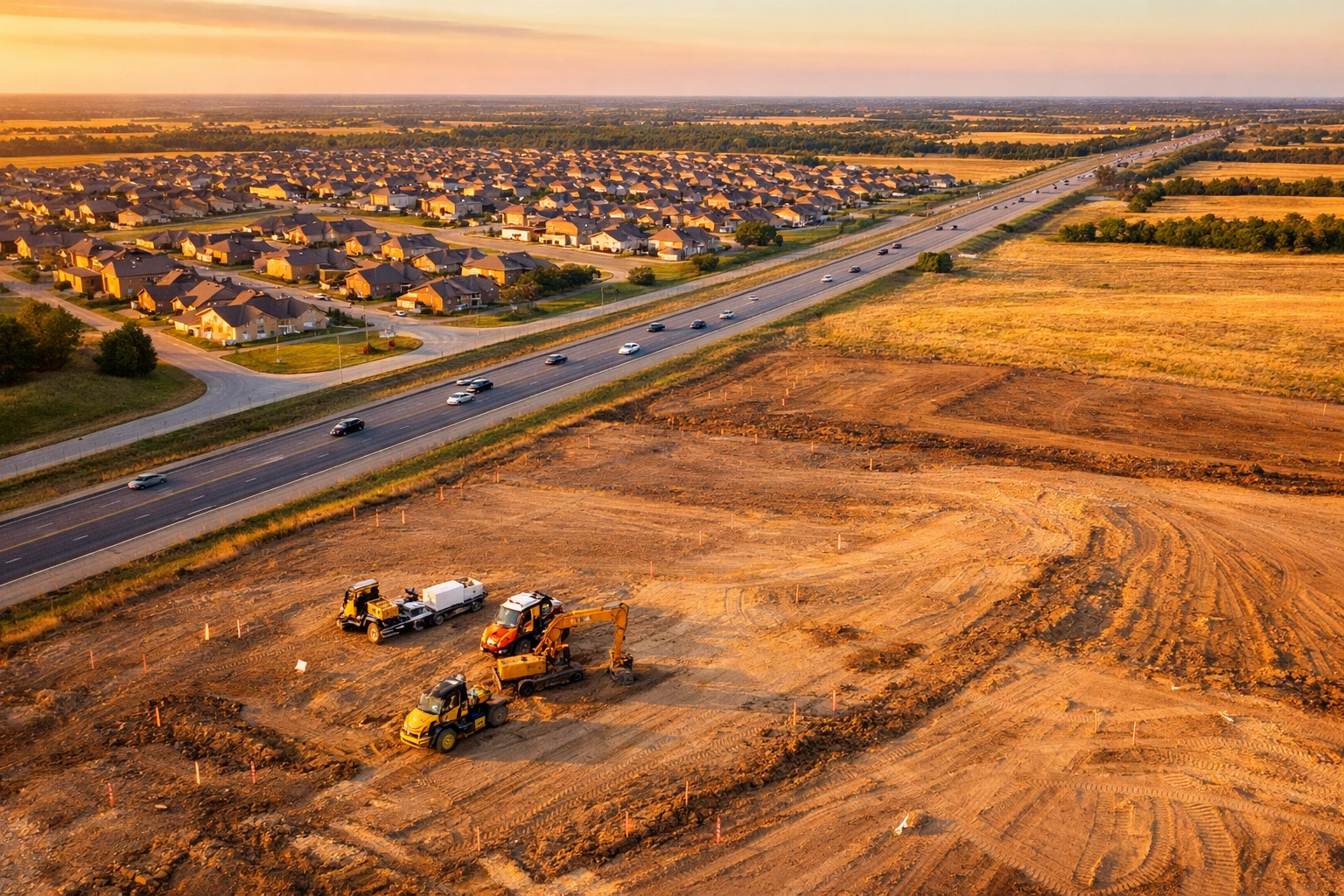
Right now, Grayson County has the basics. There's a Walmart. There's a handful of chain restaurants. There's infrastructure that worked fine when Sherman was a 40,000-person town with a stable economy. But that playbook doesn't work when you're adding 15,000 to 20,000 new residents who expect the same retail density they had in Plano or Frisco.
Here's what the market is screaming for:
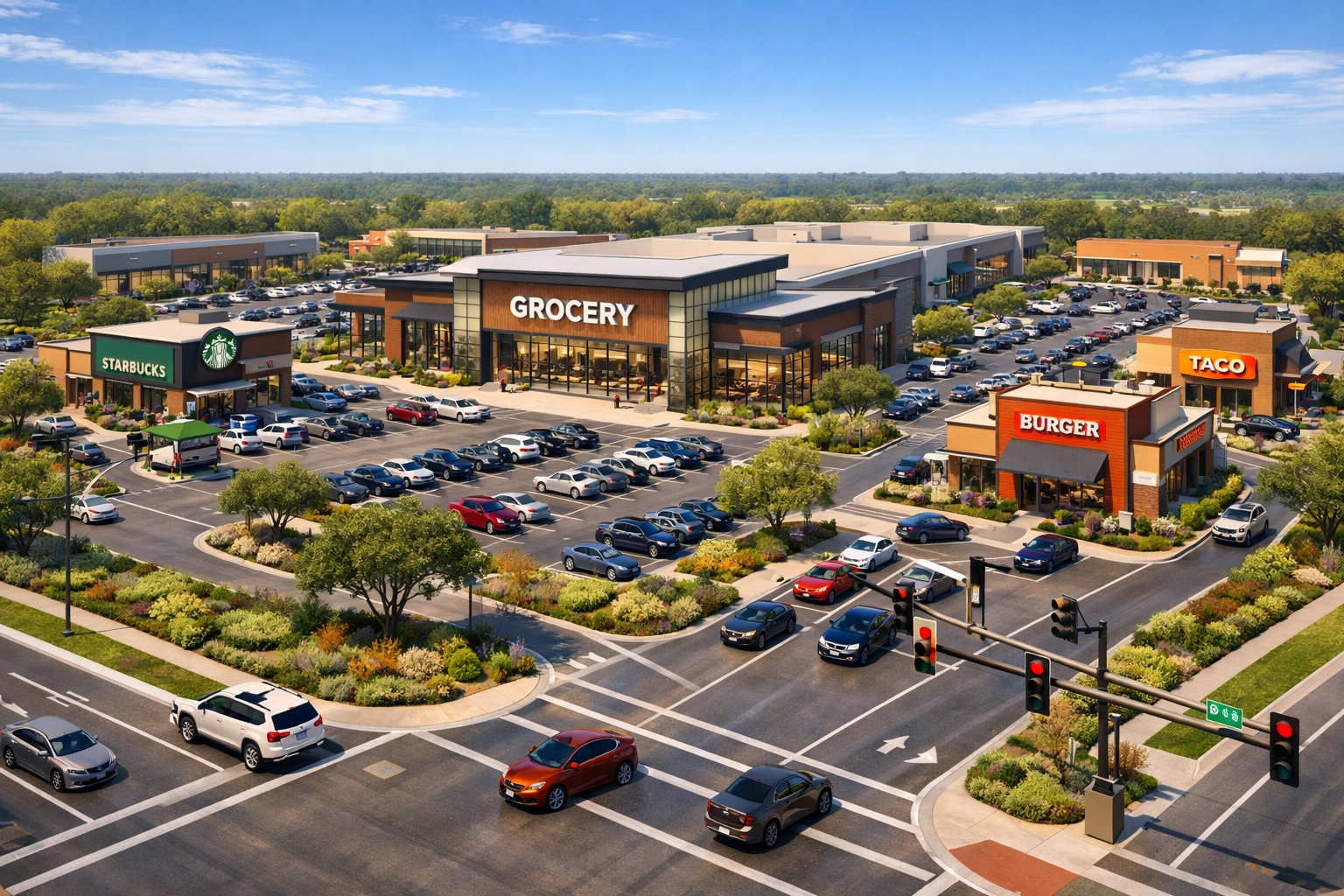
Grocery-Anchored Centers: We're seeing developers circle 10- to 20-acre parcels that can support a modern grocery store with 15,000 to 25,000 square feet of inline retail. The anchor tenant pays the rent, and the pad sites (think Starbucks, Chipotle, dry cleaner) generate the long-term value. These are the "essential service" centers that get built first.
Fast Casual and Full-Service Restaurants: The semiconductor workforce skews younger and more affluent. They're not looking for another Sonic. They want the fast-casual concepts that exploded in North Dallas: places like CAVA, Torchy's, or local chef-driven spots. That means pad sites along the main corridors are going to see a frenzy of national and regional brands competing for visibility.
Medical and Professional Services: When a county adds this many people, the need for medical offices, dental practices, and urgent care centers multiplies. We're already seeing healthcare groups and private equity-backed operators acquiring 2- to 5-acre sites near the residential clusters. This isn't speculative: it's "build now because the patients are already moving in" urgency.
Flex Retail and Entertainment: Think fitness studios, breweries, entertainment complexes. The Alamo Drafthouse model, top golf concepts, boutique fitness chains: all of these are looking at markets like Sherman because the per-capita income is about to jump 20% to 30% over the next decade.
The Land That Matters
Not every parcel in Grayson County is going to capture this wave. Commercial land has to check very specific boxes to work, and in a market like Sherman, the margin for error is thin.
Highway 82 and FM-1417: These are the two commercial spines that matter most right now. US-82 runs east-west and connects Sherman to Denison, and FM-1417 (which feeds into the TI site) is quickly becoming the de facto "main street" for the new workforce neighborhoods. Parcels with frontage on these corridors, especially at signalized intersections, are trading at $200,000 to $400,000 per acre depending on size and access.
The Loop Effect: Sherman is working on loop infrastructure to ease congestion as the population grows. Developers who can identify where the future outer loop will connect to the main corridors are sitting on tomorrow's "golden corner" sites. That's not speculation: that's reading a city's master plan and understanding that traffic equals retail value.
Proximity to Residential Clusters: A grocery-anchored center three miles from the nearest subdivision is a hard sell. The winning sites are the ones within a mile or two of dense residential, ideally on the "drive home from work" side of the road. That's where tenants want to be, and it's where land prices reflect genuine commercial viability.
The Timeline and the Tenant Mix
If you're looking at a commercial site in Grayson County today, the question isn't "if" the retail will come: it's "when" and "what order."
2026-2027: Grocery and Essential Services: The first wave is already breaking. We're seeingGroundLease Advisors and institutional retail developers under contract on sites that can deliver a grocery-anchored center by late 2027. These are the projects that get financed first because the anchor tenant (Kroger, Sprouts, H-E-B) pre-commits and the banks underwrite on day-one occupancy.
2027-2029: Fast Casual and Restaurant Pads: Once the grocery centers are vertical, the restaurant groups follow. They want visibility, they want proximity to rooftops, and they want to open the day the neighborhood hits critical mass. Expect a rush of national QSR brands (quick-service restaurants) and fast-casual concepts lining the outparcels.
2029-2032: Entertainment and Lifestyle Retail: This is the "luxury" tier that comes after the essentials are covered. Think breweries, entertainment complexes, boutique fitness, upscale dining. These projects require a proven customer base and disposable income, which is why they lag behind the grocery wave by 24 to 36 months.
Why This Matters for Land Investors
If you bought residential land in Grayson County in 2022, you probably did well. Builders were desperate for inventory, and the pricing reflected that urgency. But the residential play is largely priced in now. The commercial play is just starting.
Here's the difference: commercial land doesn't trade as fast, but it trades at higher per-acre values when it's in the right spot. A 10-acre site with highway frontage near a residential cluster can command $250,000 to $350,000 per acre in today's market, versus $75,000 to $125,000 per acre for residential development land in the same county.
The other advantage? Commercial tenants sign 10- to 20-year leases with built-in rent escalators. If you're willing to hold and develop (or ground lease), the income stream is far more predictable than trying to flip residential lots in a rate-sensitive market.
The Risk and the Reality Check
Not every commercial site is going to work. Sherman and Denison aren't Frisco. They're not going to support the same density of retail, and they're not going to attract every national tenant that works in Collin County.
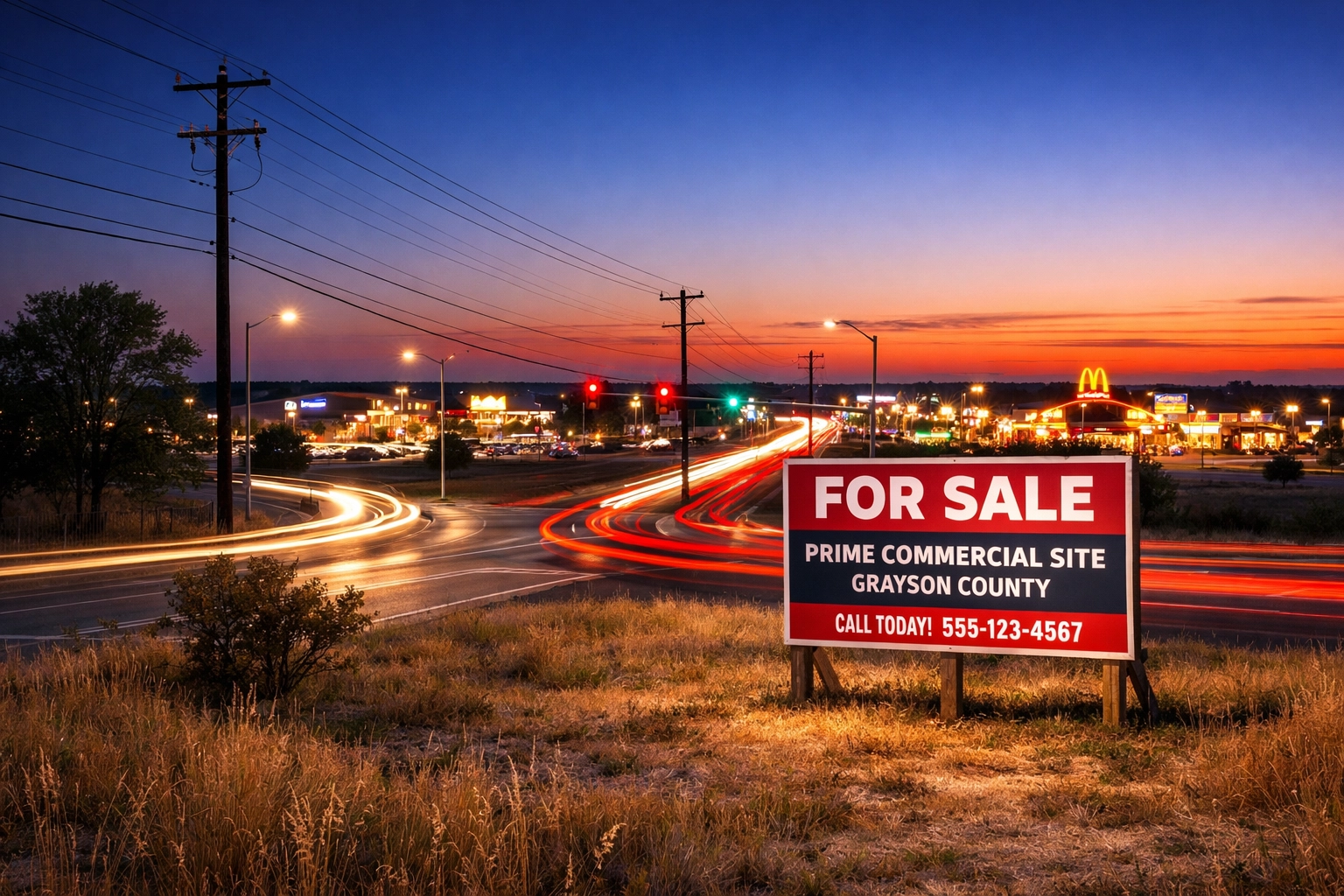
The risk is buying a site that's "close but not close enough" to the real action. A parcel two miles off the main corridor might look cheap, but if it doesn't have the traffic counts, the visibility, or the access, it's just cheap land: not a commercial opportunity.
The other risk is timing. If you buy today and the residential absorption slows (because rates stay high or the semiconductor projects delay workforce ramp-up), you could be sitting on a site for three to five years before a tenant is ready to commit. That's a long carry in a market where property taxes and financing costs add up fast.
The Bottom Line
The Sherman surge isn't over: it's just shifting from industrial and residential into the commercial and service phase. The next 36 months are going to define which parcels become the grocery-anchored centers, the restaurant rows, and the medical office hubs that serve the new workforce.
If you're sitting on commercial-zoned land (or land that can be rezoned) along the right corridors, this is your window. The national tenants are circling, the developers are assembling sites, and the city is trying to keep up with infrastructure planning.
The opportunity isn't waiting for the wave to hit. It's understanding that Phase 2 is already here, and the guys who move now are the ones who'll be cashing rent checks when everyone else is still trying to figure out where the retail went.
OUR LISTINGS

© 2026 Cooper Land Company
DMCA Notice | Terms & Services | Privacy Policy | Accessibility Statement
EQUAL HOUSING OPPORTUNITY



Cooper Land Company
2501 Greenspoint Ln, Prosper, TX 75078
Mobile: 214-714-5638
dan@cooperlandcompany.com