Bois d'Arc & Leonard: The New Waterfront Wealth in Fannin County
Bois d'Arc & Leonard: The New Waterfront Wealth in Fannin County
![[HERO] Bois d'Arc & Leonard: The New Waterfront Wealth in Fannin County](https://cdn.marblism.com/2uFo8fS2ZFg.webp)
Infrastructure follows the water. Always has, always will.
And in Fannin County, that principle is playing out in real time. Bois d'Arc Lake: the first major reservoir built in Texas in nearly 30 years: is now full, operational, and quietly reshaping the real estate landscape from Leonard to Bonham. This isn't about lakefront cabins or weekend getaways. It's about the fundamental recalibration of how land gets valued when a $1.6 billion water infrastructure project drops into a region that's been waiting for its turn.
If you're looking for the next waterfront wealth play in North Texas, this is it. And unlike the speculative land grabs happening in faster-moving counties, Fannin County offers something increasingly rare: provable economic momentum tied to permanent infrastructure.

The Lake That Changed Everything
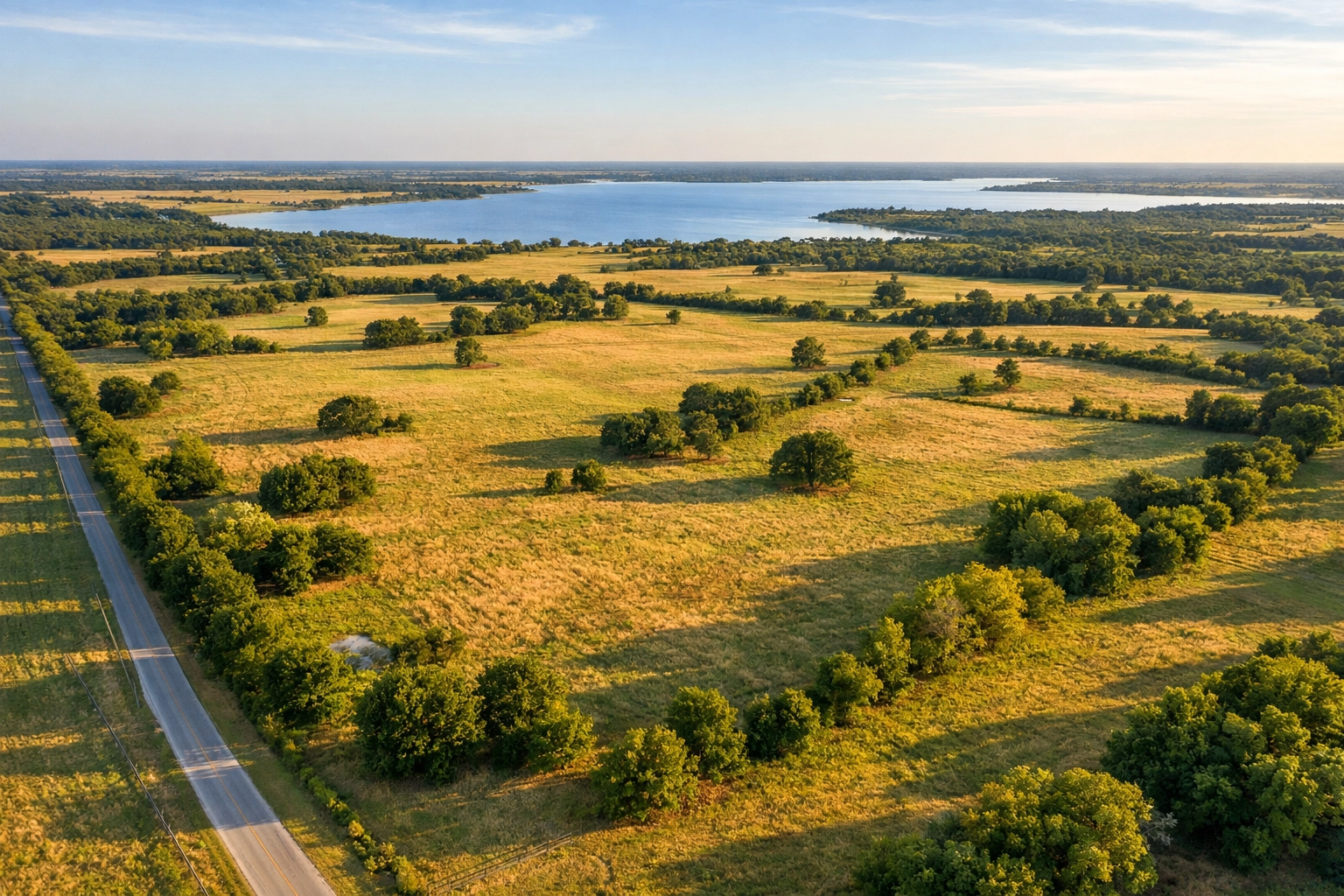
Bois d'Arc Lake isn't just big: it's 16,000+ acres of surface water designed to serve over two million people across the North Texas Municipal Water District. Completion wrapped in fall 2022, and since then, the economic ripple effects have been undeniable.
During construction alone, the project generated roughly $509 million in economic activity for Fannin County. That's jobs, hotels, equipment suppliers, contractors: the whole supply chain. But the real prize is what comes next: once fully operational, recreation from the lake is projected to generate around $166 million annually for the county.
That's not a one-time bump. That's a recurring revenue engine tied to fishing, boating, camping, and tourism. And when you stack recurring tourism dollars on top of regional water security, you get something every long-term land investor should recognize: durable demand drivers.
Leonard: From Pass-Through to Infrastructure Hub
Leonard used to be a place you drove through on your way to somewhere else. Not anymore.
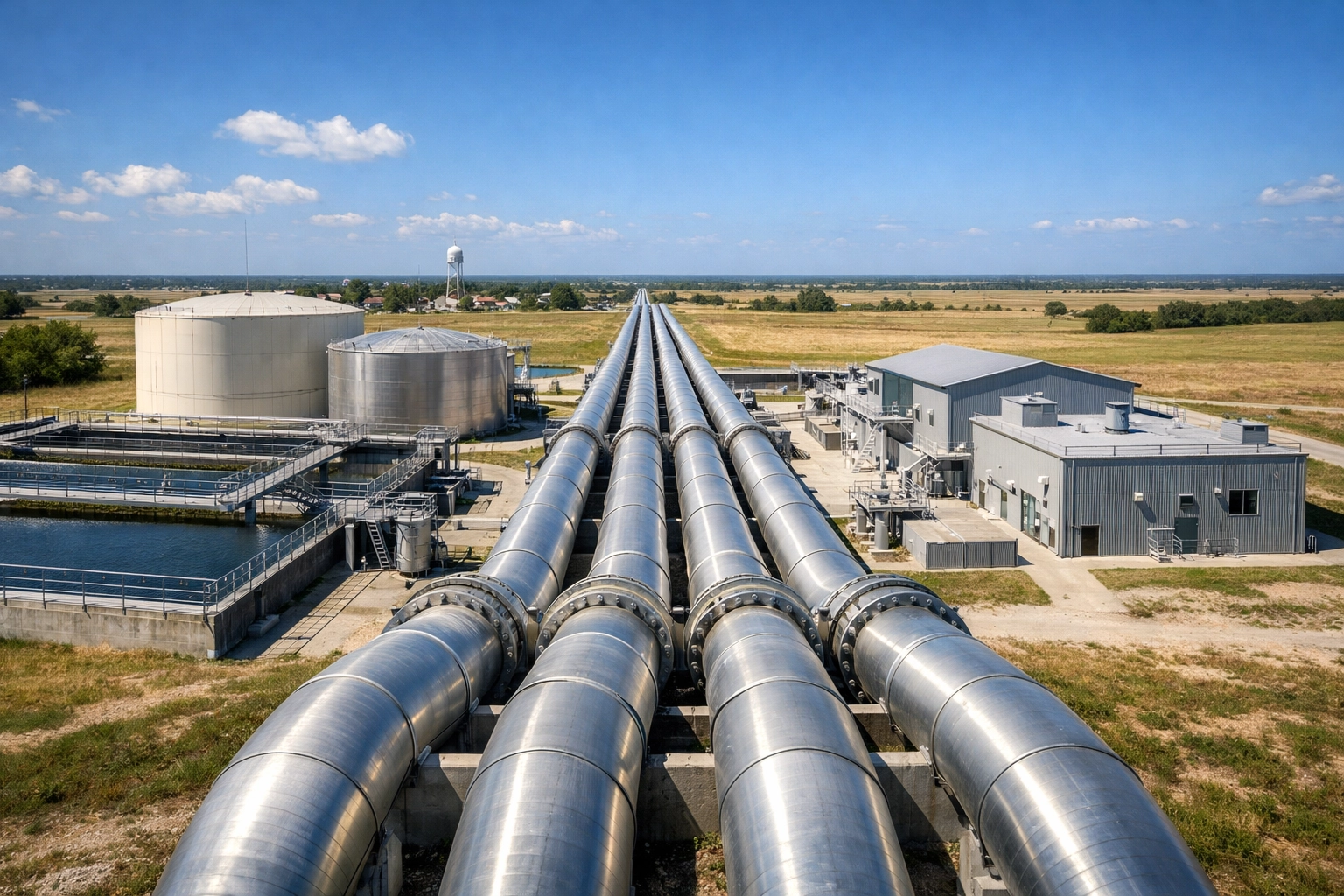
The town is now home to one of two brand-new water treatment plants built as part of the Bois d'Arc initiative. This facility processes water from the lake and moves it into the NTMWD system via a massive 90-inch diameter pipeline. We're talking up to 90 million gallons per day of treated water flowing out of Leonard and into the homes and businesses of North Texas.
That kind of infrastructure investment doesn't happen in towns that are expected to shrink. It happens in towns positioned for growth.
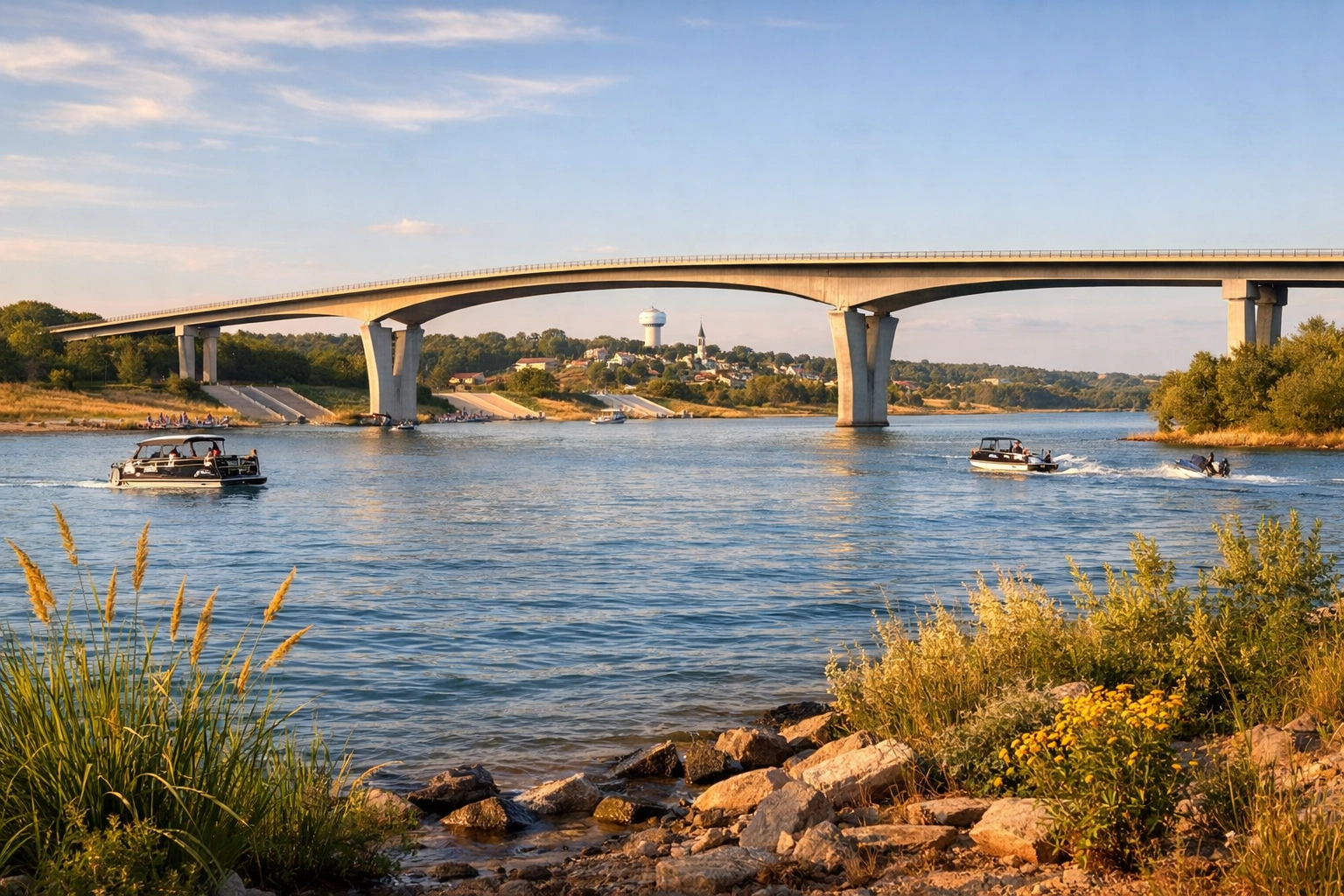
And growth is exactly what's starting to show up. The combination of lake access, improved roads (including a new FM 897 bridge spanning the lake), and expanded emergency services infrastructure has turned Leonard into a legitimate contender for residential and mixed-use development. The land that was once valued purely for agriculture is now being eyed for recreation-focused residential tracts: the kind that appeal to buyers looking for space, water access, and proximity to the Metroplex without the Metroplex price tag.
Bonham: The County Seat Getting a Second Look
Bonham's always been the anchor of Fannin County, but Bois d'Arc Lake has given it a new selling point: it's no longer just a quiet county seat: it's a gateway to one of the newest recreational hubs in Texas.
The lake brought with it upgraded infrastructure, including the replacement of an obsolete water treatment plant in Bonham, three public boat ramps, picnic areas, and a Lake Operations Center that doubles as an educational facility and emergency operations hub. These aren't cosmetic upgrades. They're the kind of foundational improvements that attract long-term investors and developers who want to see where the county is headed, not just where it's been.
Bonham is also benefiting from the broader recognition that Fannin County is no longer "too far out." With improved roads, regional water supply locked in, and recreational amenities now on the map, the distance from Dallas suddenly feels a lot shorter.
The 100–500 Acre Sweet Spot
Here's where the opportunity gets interesting for land investors.
The tracts getting the most attention right now are in the 100 to 500-acre range. These aren't massive ranch holdings, and they're not small-lot subdivisions. They're the in-between parcels that have historically been tough to value because they're too big for traditional residential buyers and too small for large-scale agricultural operations.
But with Bois d'Arc Lake now operational, that calculus has changed. These mid-sized tracts are ideal for recreation-focused residential development: think gated lake communities, RV parks with long-term leases, agritourism ventures, or phased residential projects that cater to buyers looking for land, privacy, and proximity to water.
The key word here is transition. Raw land that was valued at agricultural rates is transitioning into development-ready inventory. And because Fannin County hasn't been overrun by the kind of speculative fever you see in counties closer to the Metroplex, the pricing still makes sense. You're not paying for hype. You're paying for infrastructure and access: two things that hold their value regardless of market swings.
Why This Is Different from Other "Waterfront" Plays
Every time a new lake or reservoir gets mentioned, you hear the same pitch: "It's the next Lake Texoma!" or "This is the new waterfront gold rush!" Most of those pitches are built on hope and marketing. Bois d'Arc is built on something more tangible.
1. It's a regional water supply project, not a recreational afterthought.
Bois d'Arc was designed first and foremost to deliver water to millions of people. The recreational component is a bonus, not the business case. That means the infrastructure is permanent, the funding is secure, and the long-term viability of the project doesn't hinge on whether people show up to fish.
2. The environmental restoration is massive.
Alongside the lake, developers completed one of the largest environmental restoration efforts in the United States: 17,000+ acres of reforestation, stream restoration across nearly 70 miles, and extensive wildlife habitat enhancement. That's not just feel-good PR. It's a signal that this project was built to last and designed to integrate with the landscape, not dominate it.
3. Fannin County is still affordable.
Compared to counties closer to Dallas, Fannin County land prices remain reasonable. You're not competing with hedge funds or out-of-state institutional buyers (yet). You're dealing with local landowners, family trusts, and legacy holdings. That window won't stay open forever, but right now, it's still accessible.
What Long-Term Investors Should Be Looking For
If you're serious about positioning yourself in Fannin County, here's what you need to focus on:
- Proximity to the lake, but not necessarily lakefront. The best value is often in the tracts within 5–10 miles of the water. You get the benefit of the lake's impact on the region without paying the premium for direct water access.
- Access to improved roads. The new FM 897 bridge and other road upgrades are game-changers. If your tract has improved road access, your development timeline and carrying costs drop significantly.
- Flexibility in use. Look for properties that can support multiple end uses: recreation, residential, agritourism, or phased development. The more exit strategies you have, the better positioned you are to ride out market shifts.
- Ag-exempt status. If you can buy a tract that's already ag-exempt, you're immediately lowering your annual tax burden while you hold. That makes the long-term play more viable, especially if you're not in a rush to develop.
Cooper Land Company's Fannin County Expertise
We've been working in Fannin County long before Bois d'Arc Lake was a household name. That means we've seen the transition firsthand: from the early planning stages to the construction boom to the current phase, where smart investors are positioning themselves ahead of the next wave of growth.
If you're looking at land in or around Leonard, Bonham, or the broader Bois d'Arc corridor, we can help you navigate what's actually available, what's been overpriced, and where the real opportunities are hiding. This isn't a market where you want to guess. You need someone who knows the county, knows the players, and knows how to structure a deal that works for the long haul.
You can explore our available land listings here or reach out directly if you want to talk specifics about Fannin County opportunities.
The Bottom Line
Bois d'Arc Lake is the kind of infrastructure project that resets a region. It's not flashy, it's not speculative, and it's not built on marketing hype. It's built on water, roads, and recreational access: the foundational elements that drive long-term land value.
For investors willing to think in decades instead of quarters, Fannin County represents one of the cleanest waterfront wealth plays in North Texas. The lake is full. The infrastructure is in place. And the 100–500 acre tracts that were once dismissed as "too far out" are suddenly looking a lot more strategic.
The question isn't whether Fannin County is going to grow. It's whether you're going to be positioned when it does.
OUR LISTINGS

© 2026 Cooper Land Company
DMCA Notice | Terms & Services | Privacy Policy | Accessibility Statement
EQUAL HOUSING OPPORTUNITY



Cooper Land Company
2501 Greenspoint Ln, Prosper, TX 75078
Mobile: 214-714-5638
dan@cooperlandcompany.com